Category Focus/categories/video
Video AI Tools
Discover and compare the best video AI tools and software. Browse 87+ curated tools with reviews and rankings.
Projects tracked
87
Sort mode
RECENT
Page
1
Discover and compare the best video AI tools and software. Browse 87+ curated tools with reviews and rankings.
Projects tracked
87
Sort mode
RECENT
Page
1
Wisry is an agentic ad-cloning platform built for ecommerce brands, described on its website as an 'Agentic AdClone for ecommerce.' Its core promise is simple to state and ambitious to deliver: AI agents run the whole play. They scan the Meta and TikTok ad libraries for the ads already winning in your market, clone them into your brand as static and video ads, and launch them to Meta and Google, optimized for ROAS. Wisry presents itself as a way to get 'Winning ads, without the guesswork,' and headlines its home page with the claim 'Launch high-ROAS ads, 10x faster.' The platform says it is trained on over $1B of ad spend, and that the strategist agent is backed by $1B+ in ad spend used to train it. The intended audience is ecommerce brands and the marketers, agencies and growth teams that run paid social for them. Onboarding begins with a single input: paste your store URL, and Wisry builds brand memory covering products, voice, visual identity and audience, so that every agent stays on-brand. From there the platform is meant to act as an autonomous ecommerce growth team. Paid social for ecommerce is a research-and-iteration problem as much as a creative problem. The Wisry site frames the status quo as slow and uncertain: marketers spend weeks on research, creative production and launch, and much of that effort is guesswork about which hooks, angles and formats will actually convert. Wisry's own customers describe the pain directly. One supplement brand says that in its category 'speed is everything' - it does not need more creative ideas, it needs to spot what is winning and replicate it before the window closes. An agency customer says the bottleneck 'was always research and iteration,' and that agentic research finds what is working across a market and turns it into output at a pace a manual team could not touch. Another customer, selling hardware to Tesla owners, notes that it operates in a niche audience 'where every ad dollar counts' and that it is no longer 'testing blindly' but scaling what is proven. Wisry's answer to this is to replace open-ended guessing with evidence pulled from ads that are already spending and converting in the market. The first group of capabilities is research and strategy. Wisry's flagship feature is agentic ad research: research agents read the ads already running in your market, cite what they found, and turn the winners into angles you can brief. The site shows this working against the Meta ad library and TikTok top ads, ranking the ads it finds - for example, a ranked set where the top three of nineteen are surfaced with details such as how long each ad has been live (64 days, 35 days, 23 days), how many variants sit behind the concept (17, 10 and 6), and impression counts in the millions. The reasoning shown is explicitly performance-based: the longest unbroken spend in the run, a format that survived a full test cycle, and the fastest variant ramp in the category. A strategist agent then turns that research into campaign concepts covering audience, hooks and messages, and attaches source citations behind every angle. Because Wisry builds brand memory from your store URL - products, voice, visual identity and audience - every agent in this chain stays on-brand rather than producing generic output. The second group is creative production. Wisry clones video ads: point it at a video ad that works and get your own version of it, matching the same structure and pacing while swapping in your product and your brand; the site illustrates this as 'Structure matched' across hook, proof and close. Static ad cloning follows the same logic: Wisry rebuilds a winning static in your palette, your type and your product shots, then fans it out into every placement you need. The site is explicit about what is kept and what is swapped - layout, headline structure and type are kept, while palette, product and type are swapped for your brand. On top of cloning, Wisry ships ad templates so campaigns start from formats with a track record instead of a blank canvas; templates include listicle, problem-solution, quiz, portrait, us-vs-them, seasonal, feature-benefit and how-to, arriving in feed (1:1 and 4:5), portrait (2:3), landscape (16:9) and story (9:16) sizes, and each one is sized and safe-area-checked for its placement, including Reels, Story and Feed. Finally, every generated cut opens in a real video editor inside Wisry, where you can retime scenes, restyle captions, swap a shot and re-render without leaving the platform. The third group is launch and optimization. Once creatives exist, an ads agent ships them to Meta and Google, watches performance, moves budget to winners, and keeps new creatives coming - a loop the site summarizes as 'launches, optimizes, repeats. 24/7.' This is what makes the system agentic rather than a one-off generator: the same platform that produced the ads from market evidence also handles distribution and budget allocation based on how those ads perform. Wisry describes its studio as shipping nine capabilities, all pointed at selling more of your products, with the two flagship features being the ones everything else is downstream of. The end-to-end loop is presented as a continuous cycle rather than a campaign: research feeds strategy, strategy feeds creative, creative feeds launch, and launch performance feeds the next round of iteration. Wisry's overall approach is deliberately end-to-end and evidence-first. The workflow is described in five steps: first, Wisry pulls your brand and products after you paste your store URL, building brand memory across products, voice, visual identity and audience; second, a research agent deep-analyzes your Meta and TikTok competitors' ads and content to find what is already converting; third, the strategist agent generates evidence-backed angles for your campaigns, including audience, hooks and messages with source citations; fourth, the agents copy winning creatives for your products, generating video and static ads from the best-performing ads and your chosen angles; and fifth, the ads agent launches, optimizes and repeats around the clock. The site summarizes the whole flow as 'Your store in. Winning ads out.' Under the hood, Wisry says it is orchestrated using leading models, listing Grok, Gemini, OpenAI, Claude, KlingAI and Nano Banana as the models involved. The distinguishing idea is that every angle is traceable to a real ad that is already winning, and every output stays inside the brand memory built at onboarding. The benefits Wisry claims are framed in performance and speed terms. The site advertises a +200% average boost in ad performance, $1B+ in ad spend used to train the strategist, a 10x faster path to launching a high-ROAS campaign, and a shift from weeks to minutes for research, creative and launch handled end to end. Customer quotes add concrete outcomes: a hardware brand selling to Tesla owners reports ROAS up 300% since starting and describes scaling what is proven instead of testing blindly; a supplement brand reports shipping winning variations 2x faster and describes the difference as reacting to trends versus riding them; and an agency says it has scaled client accounts much faster because agentic research finds what works across a market and turns it into output at a pace its team could not match manually. Concrete scenarios described in the content include a niche hardware brand that sells to Tesla owners and needs every ad dollar to count, scaling what already works in its account; a supplements brand operating in a fast-moving category that needs to spot winning creative and replicate it before the window closes; and an agency running ads for many clients, where research and iteration were the bottleneck and agentic cloning lets it scale client accounts faster. More generally, the product is built around the ecommerce advertising workflow of importing a store, researching a market's Meta and TikTok ads, generating evidence-backed angles, cloning winning static and video creatives into a brand's own palette, product shots and type, fanning them out across placements using templates, launching to Meta and Google, and then continuously moving budget toward the winners while new creatives are produced. Wisry is a paid product. The pricing section offers three commitment lengths with one payment up front, after which the plan continues month to month: 2 weeks at $49.50 (discounted to $34.65, saving 30%), 4 weeks at $99 (discounted to $49.50, saving 50%, marked Most Popular), and 8 weeks at $198 (discounted to $89.10, saving 55%). The site highlights a per-day cost of $3.53 at full price, reduced to $2.48, $1.77 and $1.60 per day at the three tiers, and the entry call to action is 'Get started for $49.50' with the note that this is one payment of $49.50 for 4 weeks, then $99/month, cancel anytime, secured by Stripe. Wisry runs in the browser as a web app. The site also notes a Product Hunt launch promotion offering up to 55% off. In short, Wisry's primary value proposition is that ecommerce advertisers no longer have to guess what creative will work. By researching the Meta and TikTok ads already winning in a market, converting that evidence into cited angles, cloning the strongest static and video creatives into a brand's own identity, launching them to Meta and Google, and then optimizing budget around performance around the clock, Wisry turns paid social from a slow, speculative process into a faster, evidence-driven loop - 'Winning ads, without the guesswork.'
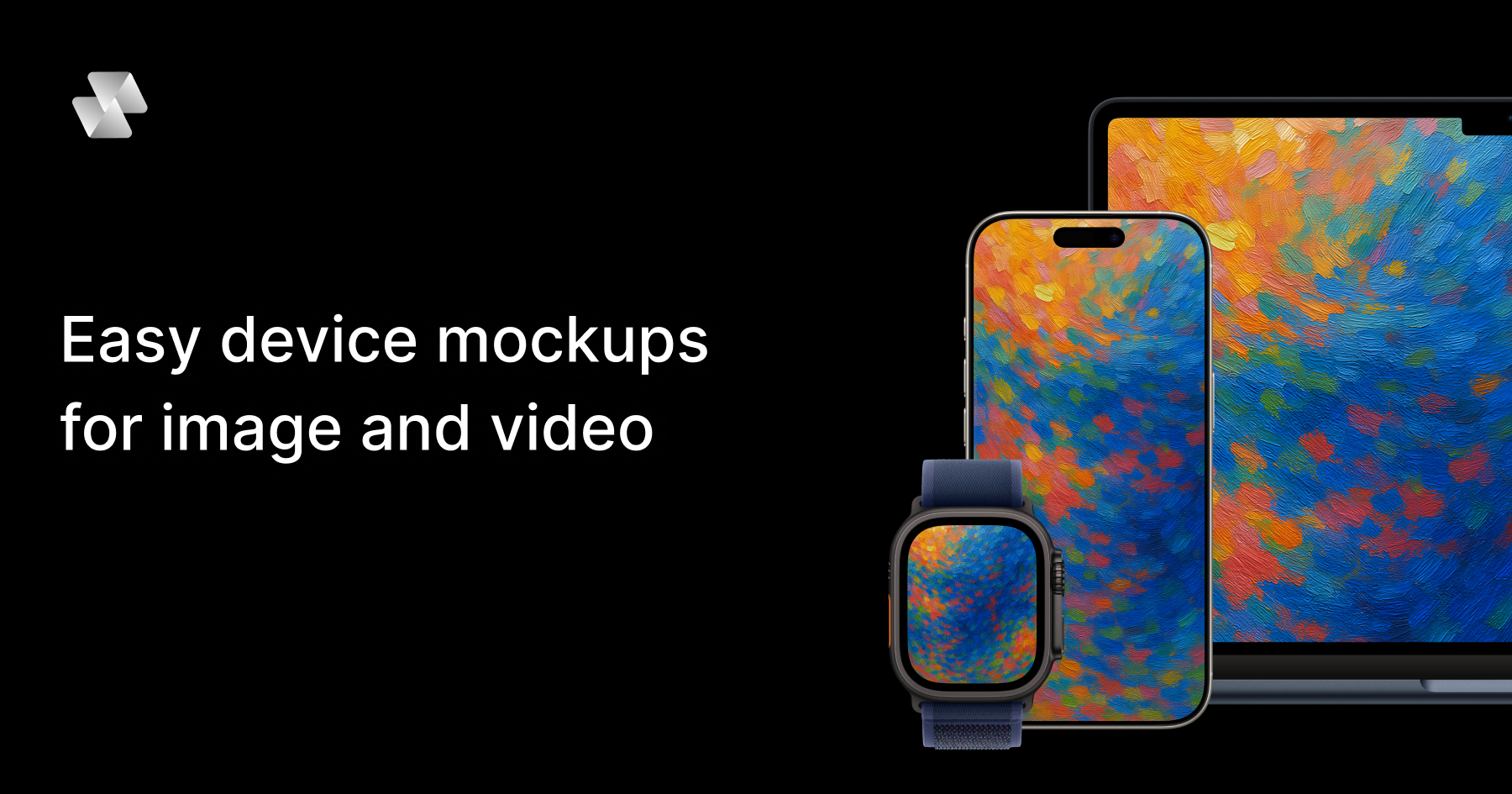
Mock Magic is a browser-based device mockup generator that creates video and image mockups for apps, websites, and digital products. You upload a screenshot or a screen recording, pick a device frame, and export the finished mockup in seconds. The tool is built around a simple editor and a library of 54+ device variants, including the latest iPhones, Android phones, iPads, MacBooks, desktop monitors, and smartwatches. Image mockups are free and unlimited, while video mockups are offered as a premium feature for paid subscribers. Mock Magic is aimed at designers, developers, freelancers, and marketing teams who need polished, presentation-ready device mockups without opening heavy design software — no Photoshop and no After Effects, and nothing to install. Presenting an app, a website, or a digital product usually means placing screenshots inside a realistic device frame so viewers can instantly understand how the product looks in context. Most mockup tools stop at images, which means anyone who needs motion — an app promo video, a social media clip, or an animated hero section — has to move into a video editor or animation tool. Mock Magic addresses that gap by turning a screen recording into a polished device video, in your brand colors, in the browser, in seconds. It also addresses consistency: when several people produce mockups for an App Store listing, a website, or social channels, saved presets make every mockup match the same device, background, and brand treatment instead of drifting apart. Mock Magic supports 54+ device variants so the frame always matches the content being shown. The library covers the latest iPhones (including iPhone 17 Pro), Android phones, iPads, MacBooks, desktop monitors, Apple Watch and other smartwatches, and it is constantly updated with new devices. Dedicated device pages exist for iPhone mockups, MacBook mockups, iPad mockups, Android mockups, desktop mockups, and smartwatch mockups. Alongside the individual devices, the device compositions feature lets you choose from a wide range of devices and layout templates, so you can place a single device on a canvas or build a multi-device composition that shows the same interface across a phone, a tablet, and a laptop. Backgrounds are optional but highly configurable. You can highlight your design with solid or gradient backgrounds, choose custom background colors with a color picker, or upload your own background images. This matters because a mockup is often the first visual a viewer sees on an App Store listing, a landing page, or a slide, and the background is what ties the device frame into the surrounding brand design. Custom backgrounds are saved to your account for easy reuse in future mockups, which keeps repeated work consistent and removes the need to re-upload the same asset every time. Mock Magic offers a wide variety of templates to suit different mockup needs, including templates with different orientations, single-device layouts, and multi-device compositions. Some templates are included in the free plan, while premium templates with advanced layouts and features are available exclusively for Pro subscribers. Verified input formats include PNG, JPG, and SVG for images, plus MP4 and WebM for videos, and all mockups can be downloaded in high resolution. You can also save your device selection, background choice, and template preference as default settings, so every time you create a new mockup your preferred options are automatically selected — saving time and ensuring consistency across projects. The workflow itself is deliberately simple. Open the editor in your browser, upload an image or a video, select a device frame, pick a template or composition, then optionally set a brand color using a hex code or add your own background. From there you download the finished mockup. Because the editor runs entirely in the browser, there is nothing to install and no heavyweight creative suite involved. The most distinctive part of the approach is the preset: you save your setup once — device, background, brand color, template — and reuse it, so a screen recording becomes a branded device video in one repeatable step rather than a fresh design job every time. The benefits follow directly from that workflow. Teams get professional-looking mockups with minimal effort, since templates and compositions remove the need to hand-place frames. Brand consistency is maintained because saved settings and saved custom backgrounds are reused automatically. Output quality stays high because every mockup is exported in high resolution, whether it is a still image or a video. And because video is handled natively rather than as an afterthought, marketing and app teams can produce moving device mockups — app promo videos among them — without leaving the same simple editor they already use for images. Concrete uses named for device mockups include App Store screenshots, social media posts, landing page hero images, pitch decks, and app promo videos. In practice that means a designer preparing a store listing can drop App Store screenshots into iPhone and iPad frames with a branded gradient background; a marketer can record a short screen capture of a product flow and export it as an MP4 device video for a social post; a founder can generate a laptop and phone composition for a pitch deck hero slide; and a developer can produce a high-resolution desktop monitor mockup for a website landing page. Teams that repeat any of these tasks regularly benefit most from saving presets, because the second mockup and every one after it matches the first. Mock Magic is explicitly described as working for designers, developers, freelancers, and marketing teams. It is browser-based, so the only platform requirement is a web browser, and it is free to start: the Free plan includes a long list of devices, background colors and gradients, high quality export, the ability to save your selection, and unlimited video mockups, while the Pro plan is priced at €7.99 per month. According to the FAQ, you can generate unlimited free image mockups, and video mockups are available as a premium feature for paid subscribers. Supported input formats are PNG, JPG, and SVG for images, and MP4 and WebM for videos. Mock Magic's core value proposition is speed and consistency: a screenshot or screen recording goes in, a polished, branded device mockup comes out — image or video — entirely in the browser, with presets that keep every mockup for your app store, website, or socials matching the one before it.
Diiverge is a web platform that turns a single picture into an explorable world you can play. Start with any photo, painting or screenshot and it becomes a point-and-click adventure: click anything in the frame, choose what happens to it, and AI generates the next scene together with a short film of the moment in between. Each world is called a volume, and a volume is a persistent adventure that grows as people explore it. Every path a visitor takes is saved, so anyone arriving later can walk the same route, and the volume's map shows all the branches taken so far. A picture is usually a finished thing: you look at it, and that is the end of the interaction. Diiverge treats one image as a starting point instead, asking what would happen if you could reach into the frame and act on what is there. The picture already holds a scene, objects and a mood, but there is normally no way to interact with any of it or to see a consequence. Diiverge adds that layer, namely interaction, consequence, and a record of both. Because generating a new scene costs real money, each volume of the series comes with a fixed number of free scenes and stops growing once they are used up, unless sponsors add more. That constraint shapes the experience: playing and replaying are free, while new generation is limited and shared. Interaction starts with the frame. Glowing dots mark what you can interact with, so it is clear at a glance which things in the picture are live. Behind the scenes, a segmentation model cuts the things in the frame out and makes them clickable, and a vision model decides what each thing is and what it might do. Because the choices come from a model that has looked at the image's contents, the options offered relate to the actual objects in the scene rather than a fixed script. You click something in the picture, and the choices presented to you follow from what that thing has been identified as. Once you choose what happens, Diiverge generates two outputs. An image model paints the chosen event's aftermath as the next frame, so the world moves forward visually, and a video model renders the moment between the two frames as film, so the transition itself plays as a short movie. The result is an experience that alternates between still scenes you can inspect and click, and moving moments that show how the change unfolded. A judge model reads the story so far and cuts any choice that breaks its continuity, which means every branch stays consistent with what has already happened in that world. Nothing you do is thrown away. A scene you carve becomes part of the volume for good. Every path anyone takes is saved, so each world grows as visitors explore it, and the next visitor can walk the same path you did. The volume's map shows every branch taken so far, giving a view of the story as it accumulates, and a shared link lands on the exact scene it points to. Because the scenes already exist once they have been made, replaying scenes others have already carved needs nothing at all. The studio is where you build your own adventure. It turns any photo, painting or screenshot into an explorable world of your own: upload a picture, make it a world, click anything in it, choose what happens, and watch the moment play as film. The workflow is deliberately small, since you sign in with your email, buy scenes in packs, and share the link when you are ready. Until you share it, your adventure stays private. When you do share, others can follow the paths you have made, so a personal picture can become something other people explore and extend. The public side of Diiverge is organised as a series of volumes, each a world grown from one picture. A volume starts as a single seeded image and becomes a persistent point-and-click adventure. Two volumes are shown on the site. Volume II, The Crystal Pass, is presented as the latest, opened five days earlier with 2,831 scenes so far. Volume I, The Lantern Cove, is listed in the earlier volumes section with 3,033 scenes. Because generation costs real money, each volume comes with a fixed number of free scenes and stops growing once they run out, and sponsors add more for everyone. For players, the practical benefits are straightforward. Playing is free, and replaying scenes others have already carved costs nothing at all, so exploring an existing world has no threshold. Your own choices are not lost work: a scene you carve stays in the volume permanently and can be followed by later visitors, which means the world reflects everyone who has walked through it. The map turns that accumulated activity into something visible, and shared links make it easy to point someone at a precise moment. For creators, the studio offers a way to turn a picture they already own into a shareable, explorable world, kept private until they decide otherwise. The use cases described on the site are concrete. Someone can play a public volume for free, clicking through a world such as The Crystal Pass or The Lantern Cove and branching as they go. A visitor can follow a path another player already carved, walking the same route through the volume. They can consult the volume's map to see every branch taken so far. They can open a shared link that lands on the exact scene it points to. A creator can take a photo, painting or screenshot into the studio, buy scene packs, and build their own adventure before sharing the link. And a sponsor can add scenes to a chosen volume of the series so that everyone gets more to explore. Diiverge is built for people who want to play visual, branching adventures in a browser, and for people who want to make one from a picture they already have, such as a photo, painting or screenshot, without handling the technical machinery behind scene generation. Access is through the web, with email sign-in for the studio. Playing the public volumes is free, and replaying already-carved scenes is free as well. The studio works with scene packs that are bought, and sponsorships start from $25, adding about 2 scenes per dollar to the volume chosen; sponsored scenes never expire and the sponsor's name goes on the volume's frames. In short, Diiverge's promise is that one picture is enough to begin a world. The seeded image becomes a point-and-click adventure, and clicking anything in the frame, choosing what happens, and watching AI paint the next frame and render the moment as film turns a static picture into a sequence of scenes. Because every path is saved, the world keeps growing after you leave, and the map and shared links carry that growth forward to the next visitor. Play the public volumes for free, or take a picture into the studio and make one of your own.
Viral Sonar scans Instagram every morning and surfaces the Reels that are blowing up in your niche right now. Not the ones with the biggest view counts — our own algorithm detects the ones that are actually taking off, before everyone else piles in. Each reel comes with a breakdown of its format: hook, structure, pacing and why it works, so you can replicate it the same day. It also tracks the audio waves moving between accounts in your niche before they saturate. One scan every morning. No agency, no guessing.
SubtitleGenerator helps creators generate, fix, translate, style and export subtitles in one browser. It flags uncertain words for review and correction, with all 33 caption styles included free. Pro and Max add full-track translation, HD exports without a watermark, additional subtitle formats, custom fonts and saved brand styles. Your original video stays in your browser.
TimedSubs turns scripts and voiceover into delivery-ready subtitles. Sync an approved script to audio with a QA pass before export, or translate SRT/VTT files into 100+ languages without breaking timing. Includes free subtitle checker and converter tools. Pricing: 15 free timing minutes, then one-time packs or subscription.
AudienceCue helps creators, marketers, researchers, and agencies download public YouTube comments and turn them into cited AI reports. Paste a supported video, Short, live-video page, channel, playlist, or list of URLs. Keep the returned comments and available public replies in CSV, JSON, TXT, or XLSX, then generate a report whose findings stay tied to source evidence. Share a read-only report or export it as HTML, Markdown, or JSON. AudienceCue does not post replies, moderate comments, or take actions on a YouTube channel.
HubVanta AI offers advanced image and video AI tools for creating, editing, enhancing, and animating visual content in one workspace.
VizRise is an AI video generation platform that streamlines the creation process by allowing users to write text prompts or upload images, select from multiple AI models, and generate video content within a single workspace. The platform supports experimentation across video, image, music, and voice outputs, providing a unified environment for multimedia AI generation. The platform offers a credit-based access system that enables users to experiment with different AI models and outputs without traditional subscription constraints. Users can refine their results using history and uploads, maintaining an organized workflow throughout the creative process. VizRise supports multi-model outputs, allowing creators to compare and select the best results from various AI video generation models. VizRise operates on a simplified workflow where users begin by either writing a text prompt or uploading an image as input. They then select their preferred AI model from the available options and generate results. The platform maintains a history of generations and allows users to upload additional assets for refinement, creating an iterative creative process within the organized workspace. The workspace integrates video, image, music, and voice generation capabilities, eliminating the need to switch between multiple specialized tools. This consolidation allows creators to maintain consistency across different media types while managing all their AI-generated content in one location. The credit-based system provides flexibility for users who need occasional access rather than continuous subscriptions. VizRise targets content creators, marketers, and multimedia professionals who need to generate AI video content efficiently. The platform's multi-modal approach appeals to users working across different media formats who value having a centralized workspace for their AI generation needs. The credit-based pricing model makes it accessible for both occasional users and those who require frequent video generation capabilities.

VidShift is a free video and audio toolkit that runs 100% in your browser. It enables users to perform common media editing tasks without installing software or uploading files to external servers. The toolkit supports nine core functions: convert, compress, trim, create GIFs, extract MP3 audio, mute audio, rotate video, change playback speed, and extract individual frames. It handles MP4, WebM, MKV, MOV, MP3, FLAC and over 12 additional formats. Built with WebAssembly, VidShift processes files at native speed directly on the user's device. Files never leave the browser, ensuring privacy and eliminating upload wait times. The service requires no account registration and displays no advertisements or watermarks on output files. Users simply load the website, select a tool, and drop their media file into the browser. Processing occurs locally using WebAssembly modules compiled for high performance. Once complete, the edited file downloads immediately to the user's device. VidShift is designed for quick, lightweight media tasks that would otherwise require desktop software or cloud services. It addresses common frustrations with sketchy conversion sites, intrusive ads, mandatory uploads, and watermarked outputs. The tool is ideal for content creators, social media users, students, and professionals who need fast, private media editing without software installation or privacy concerns. It works on any modern browser that supports WebAssembly.