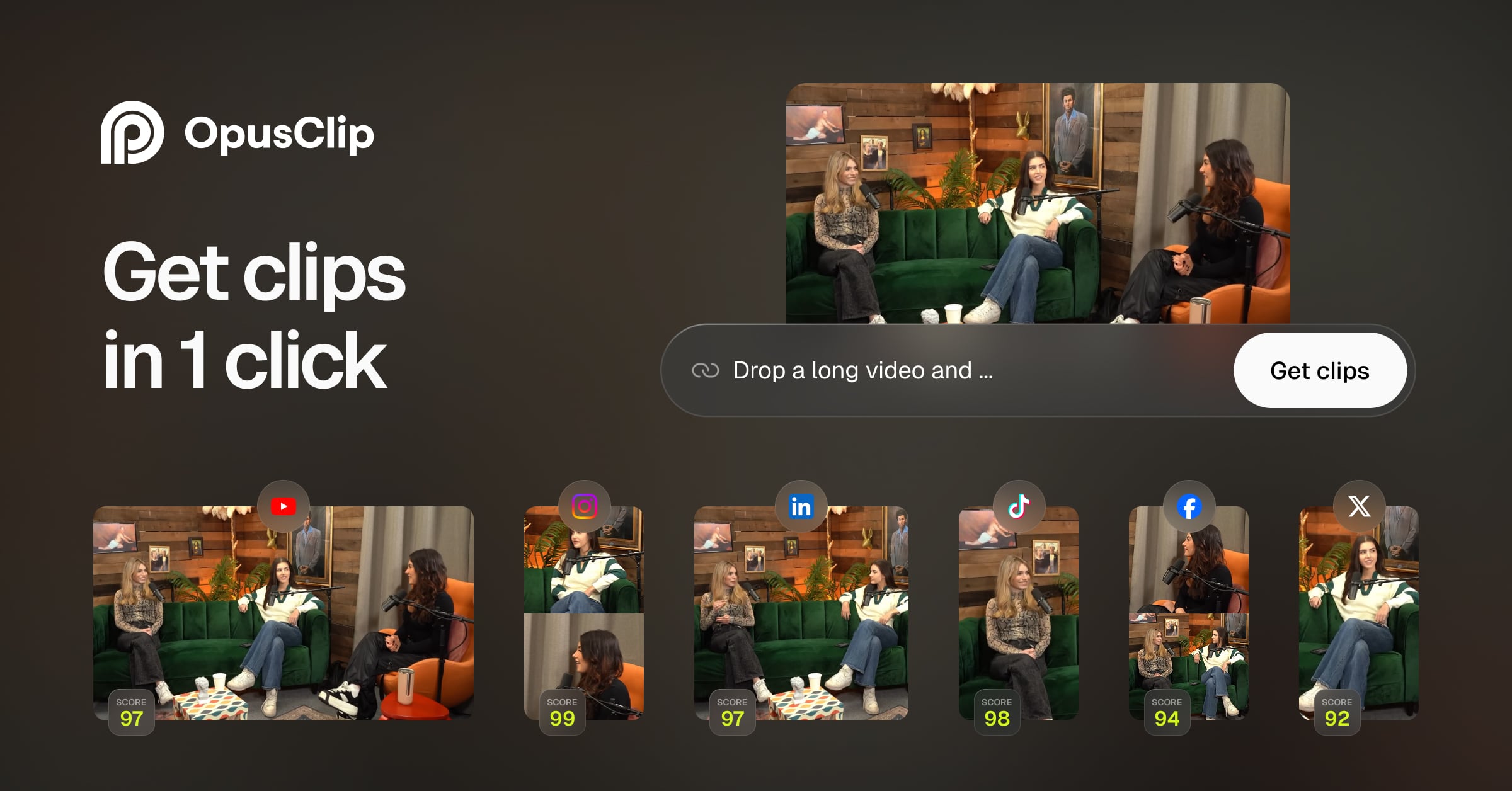
OpusClip 4.0 is an AI video editing tool that takes a raw take and turns it into finished, ready-to-publish video content. In the company's own words, it "edits your whole video, from raw take to every format you post." You drop in raw footage or paste a link, switch on what you want applied — speech cleanup, captions, B-roll and more — and a finished video comes back. The product is built for people who now have to make video content, from founders and operators to a dentist answering patient FAQs on camera every week or someone teaching their 3,000 followers how to make high-protein meals. Its stated purpose is to give a "team of one" some of the range that media companies get from a room full of editors.
The background explains why the product changed shape. OpusClip was originally built to "slice a clean fish": people brought finished videos, such as a podcast episode that was already edited or a keynote someone had cleaned up, and OpusClip found the best moments and turned them into clips. That worked — scroll your feed for a few minutes and there's a good chance you'll see a clip that came through OpusClip. But what people bring has changed. More and more, it is a raw take that nobody has had time to edit. As the company puts it, "the edit is where things stall." Founders film in one take because they know they'll never get around to cutting it, and post it as is; many already have their next good video on their phone, filmed weeks ago and never edited. For a while, OpusClip kept making clipping better and left the hardest part — the edit itself — to the user. OpusClip 4.0 takes that on.
Auto-edit is the headline capability. Built for talking videos, it lets you drop in raw footage or paste a link and then switch on speech cleanup, captions, B-roll and more. What comes back is a finished video rather than a rough cut. For the audience the product describes — founders and operators who say they almost never enjoy editing — this removes the step that previously stalled their content. Instead of posting a single unedited take because cutting it would never happen, a creator can hand over the raw recording and receive something publishable, with clean speech, on-screen captions and B-roll already applied.
Every format addresses the reality that one video is rarely enough. A single edit can become whatever you need that week: 60 to 90 second highlight clips, a 3 to 5 minute extended cut, or a quick lo-fi update. Recipes make that repeatable. Most people make the same kind of video over and over, so you can save your own setup as a Recipe — or start from one of OpusClip's — and your next video gets edited the same way. This matters for consistency: once you have found a look and structure that works for your audience, you don't have to rebuild it from scratch each time you record.
Viral Hook and Motion Graphics cover two tasks that, according to the company, editors spend hours on. Viral Hook gives your first few seconds a hook style drawn from a template library, targeting the opening moment that decides whether a viewer keeps watching. Motion Graphics turns what you say into animated icons, numbers and charts on screen, so spoken points become visual elements automatically. AI Producer extends editing into tools people already use: if you work in ChatGPT or Claude, you can edit from there with the OpusClip plugin — show it a style you like and it edits your footage to match.
Taken together, the product's approach is to own the entire path from raw recording to finished, formatted output. Clipping isn't going anywhere — it's still what OpusClip is best known for and is still getting better — but it is now one part of the platform. The method is style-driven and repeatable: you supply the footage (or a link), you choose the treatments to apply, you can preserve a setup as a Recipe, and you can demonstrate a preferred style to the AI Producer plugin rather than describing it in detail. One edit then fans out into multiple formats, so the same source material serves the different places you post.
The intended benefits follow directly from that. A solo creator gets a wider range of output without hiring editors, matching the observation that people who stay top of mind post often in a lot of formats — something media companies achieve with a room full of editors and a founder with a phone and a packed calendar usually cannot. Time previously spent on cutting, captioning, hook writing and motion graphics is redirected into recording. Content that would otherwise sit unedited on a phone can be shipped.
Concrete scenarios appear throughout the announcement. A founder recording a two-minute product update on their phone between meetings is the person the team kept picturing. A dentist answering patient FAQs on camera every week is another fit, as is someone teaching their 3,000 followers how to make high-protein meals. The original workflow still applies: an already-edited podcast episode or a cleaned-up keynote can be mined for the best moments and turned into clips. On top of that, a single recording can be delivered as a 60 to 90 second highlight clip, a 3 to 5 minute extended cut, or a quick lo-fi update, and the same Recipe can be reused the next time that format is needed.
OpusClip 4.0 runs through a web dashboard at clip.opus.pro, where you can sign in, sign up for free, or paste a link or upload footage. Pricing information in the announcement includes a Free Forever Plan described as letting you create and post one short video every day for free, plus a Pro monthly plan for which new users are offered 40% off the first month. The wider Opus platform also includes OpusSearch, which uses AI to surface the exact clip you need from hours of footage in seconds, and Agent Opus, which the site describes as running the entire video pipeline — research, scriptwriting, storyboarding, motion, voice and edit. The company says OpusClip is used by more than 20 million creators and brands.
In short, OpusClip 4.0's value proposition is that the edit no longer has to be the bottleneck. One raw take goes in, and finished videos in the formats you actually post come out — cleaned up, captioned, styled with hooks and motion graphics, and repeatable through Recipes, so a team of one can publish like a much larger operation.
Publisher
A
admin
Launch Date2026-11-05
Platformweb
Pricingfreemium