Category Focus/categories/learning
Learning AI Tools
Discover and compare the best learning AI tools and software. Browse 53+ curated tools with reviews and rankings.
Projects tracked
53
Sort mode
RECENT
Page
2
Discover and compare the best learning AI tools and software. Browse 53+ curated tools with reviews and rankings.
Projects tracked
53
Sort mode
RECENT
Page
2
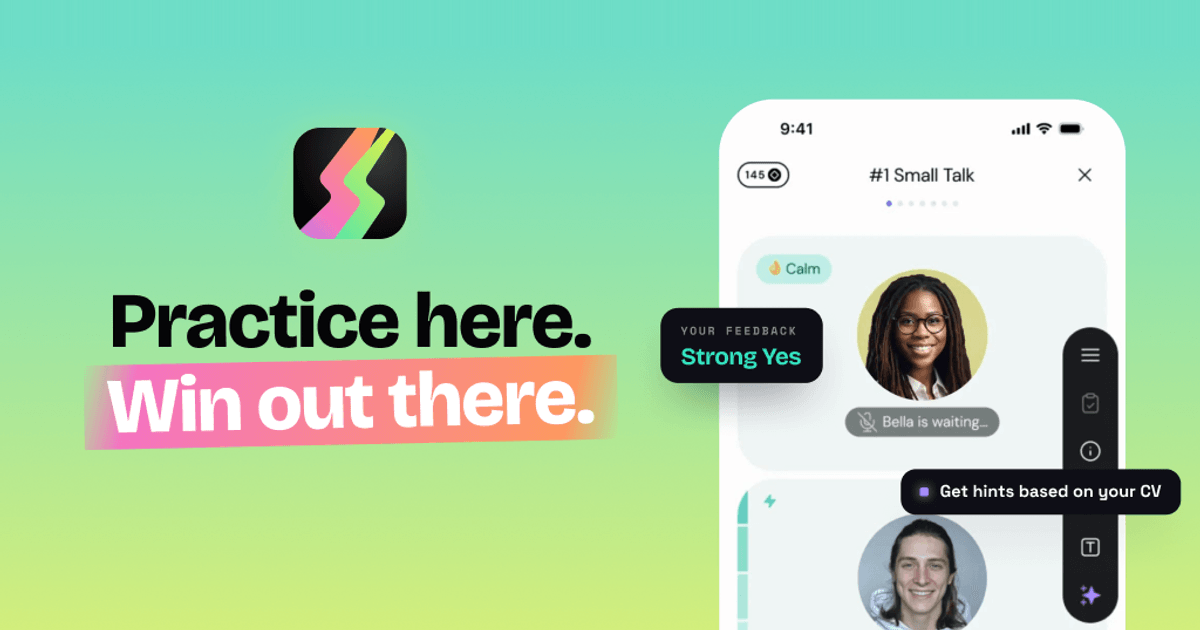
Duos is an AI-powered job interview preparation app that lets candidates rehearse a realistic voice interview before the real thing. You paste a link to a real job posting — the site says it can analyze any public link, including LinkedIn — and Duos builds the company, the role, the questions and a personalized interview flow around it. From there you put on headphones and talk out loud to an AI interviewer in a live voice conversation, just as you would in an actual interview. The product is built for anyone preparing for a job interview, from a first internship through to a senior career switch, and its stated purpose is simple: stop guessing why you are not getting hired, fix your blind spots, and land the job offer. Why Duos exists: the site opens with the blunt premise 'Stop guessing why you're not getting hired' and lists three reasons job interviews suck. First, preparation feels fake — rehearsing answers feels nothing like the real thing. Second, total uncertainty — the stakes are high and you don't even know if you're doing well. Third, no feedback — you get rejected and never hear what went wrong. The Product Hunt description frames the same problem differently, describing interviewing as 'a social game with unwritten rules, scored by people who never explain the score.' Duos positions itself as the rehearsal, a place to practice until you know exactly what to fix, so that you build real skills without risking real interviews. As the closing line of the site puts it, 'Practice here. Win out there.' Rehearse the real interview. The core workflow starts with a real job. You paste a link to a job posting — the site shows a LinkedIn jobs URL as an example and states that it can analyze any public link, even LinkedIn. Duos then runs an extraction process: reading the job post, pulling out the role, building the company and shaping the questions. You review the recognized job details, which include the company name, the role, the requirements and a role description. From there you pick the difficulty and the interview stages and generate a personalized interview flow. Because the simulation is built from your actual job posting and your CV, the questions stop being generic — the site notes that uploading your CV means the questions get built from your actual experience rather than staying generic. Talk and read the room. The interview itself is a live, realistic voice conversation. The interface shows the interviewer speaking and then waiting for you, along with emotional state indicators such as 'Pleased', 'Concerned' or 'Impressed', and a personality tag for each interviewer. Sessions are structured in question blocks — the example shown is an all-in-one interview with Mike of roughly 28 minutes and five questions covering small talk, past experience, UX strategy, design thinking, JTBD and Figma, and a Q&A. In-interview tools let you stay in control when you get stuck: you can see what is behind every question ('What does Mike really want to know?'), get hints based on your CV, go back and retry a topic, skip questions you're not ready for, show an example answer, explain the meaning of a question, or restore energy. The site emphasises that you have to talk out loud — 'It's a voice app, because the hardest part of job interviews is talking' — and that all it takes is headphones and ten minutes alone, with the option to pause any time to gather your thoughts. Get your game plan: the debrief. After the interview Duos produces a structured interview analysis described as a recruiter's opinion, plus an outcome such as 'Strong Yes', a count of red flags and a set of patterns. The example shown includes a hiring manager's written assessment, red flags such as negative remarks about a current workplace and a candidate speech level below expectations, confidence indicators, and a problem score. It also surfaces concrete speech patterns — for instance flagging a frequent filler word, quoting the exact replies where it appeared, and explaining how it affects you ('Stutters interrupt flow and distract from content'). The site promises a full breakdown with practical advice and real examples, and states that interviewers take notes about you and here you get to read them. Duos also tracks your performance across sessions, which the feature comparison table lists as something ChatGPT does not do and other interview apps rarely do. Stages and interviewers. Duos can run the whole hiring process or you can laser-focus on a single stage: a recruiter screen of roughly 10 minutes covering your background and motivation, a skills round of roughly 20 minutes covering your skills in action, projects, decisions and hard calls, and a manager chat of roughly 15 minutes about working style and team fit. Alongside the stages sits a large roster of AI interviewers, each with a distinct personality, demeanor and difficulty level. Examples from the site include Mike the know-it-all (100% honest, easy), Justin the impatient one (driven, hard), Mirna the mission-oriented (opinionated, mid), Marcus the high-pressure (authoritative, hard) and many more ranging from unhinged to encouraging, from hostile to supportive. The site frames this as 'Every interviewer hits different — choose who you're ready for.' Privacy. Duos makes explicit commitments about how your data is handled: your data stays private, is never sold and is never used to train AI. Your CV is scrubbed before any AI reads it, no human ever hears you, you can delete everything at any time, and only enterprise-grade, audited AI providers are used. In the FAQ the company confirms that nobody hears your recordings — it is you and the simulator, no recruiter on the line, no audience — that your audio isn't stored, and that you can delete your data whenever you want. The site also states that Duos does not judge your accent: it responds to what you say, not how you pronounce it, although it will still flag a sentence that is hard to follow, because a real interviewer would too. Why not just use ChatGPT. Duos is positioned explicitly against using a general-purpose chatbot for practice. Its comparison notes that ChatGPT drifts out of character, is always agreeable and rarely honest, asks few questions and then loses track, produces dense forgettable notes, and leaves you on your own. Duos, by contrast, is listed as offering consistent interview roleplay that stays in character, pushing back for real practice, simulating the full hiring process, producing a structured report, and offering tools when you're stuck. The Product Hunt description adds that there is a proudly over-engineered multi-agent stack inside, and that you talk to interviewers who have read your CV and can change tactics mid-conversation. The outcomes for users are focused on clarity and confidence. Instead of wondering whether you did well, you get red flags, green flags and an explanation of how to fix the patterns behind them. Instead of a rejection with no explanation, you get worked examples of better answers, and you can redo the question or redo the whole interview — nobody is keeping score but you, and failing here is the point. The site says the app builds real skills without risking real interviews, and reviewer quotes on the page describe it helping a freelancer land a first full-time design role in a competitive market, helping candidates practice interview English, boosting confidence, and pushing candidates on technical details such as API security. Concrete scenarios described on the site and by reviewers include preparing for a specific interview by uploading your CV and the job posting to get a simulation with specific questions; last-minute interview preparation; continuously improving skills to stand out from the crowd on the way to a new adventure; practicing interview English and fixing weak points in conversation; keeping interview skills sharp between real calls while staying in the context of your own profile; and rehearsing for any role and any level, from a first internship to a senior switch. The site notes that Duos will still ask hard technical questions and push you on your projects and decisions, but it is not a whiteboard tool. It also can't predict how a real conversation will go — the point, it says, is that whatever they throw at you, you can answer. Duos is available as a website and as a mobile app, with 5.0 ratings listed for both the App Store and Google Play. Pricing is straightforward: you get one full interview free with no card needed, and after that plans start at €22.99 a month, less if you pay quarterly, and practice is unlimited. It supports any role and any level. The FAQ answers questions about privacy, about whether you have to talk out loud (yes, it's a voice app), about what happens if you fail (you get feedback and worked examples of better answers), about whether it judges your accent (no), and about whether it supports technical interviews (it runs recruiter screen, skills deep-dive and hiring manager rounds but is not a whiteboard tool). In short, Duos turns interview preparation from guesswork into a repeatable loop: paste a real job, rehearse out loud with an in-character AI interviewer who has read your CV, then read a structured debrief that tells you exactly what to fix. Interview, debrief, repeat until you're ready — practice here, win out there.
ReferralWorld Careers is an AI-powered career platform designed to connect early-career tech professionals with job opportunities. The platform specifically targets individuals with 0-4 years of experience in the technology sector, providing them with multiple pathways to employment including referrals, direct recruiter engagement, internships, and internal hiring opportunities. The platform offers several key features for job seekers in the tech industry. It provides access to verified job openings, helping candidates find legitimate opportunities in their field. The referral system allows users to leverage their professional networks and community connections to access job opportunities. Additionally, the platform facilitates direct connections with recruiters, enabling faster hiring processes for qualified candidates. ReferralWorld Careers operates as a community-driven ecosystem that emphasizes modern recruitment practices. The platform helps candidates grow their professional networks while accessing verified job opportunities. Through its AI-powered approach, it streamlines the connection between tech talent and employers, creating a more efficient hiring process for both parties. The platform is designed to accelerate the hiring process for tech professionals at the beginning of their careers. By providing multiple avenues for job discovery including referrals, direct recruiter hiring, internships, and internal opportunities, it creates a comprehensive job search experience. The community-driven aspect ensures that candidates can build meaningful professional relationships while searching for employment. ReferralWorld Careers specifically serves tech professionals with 0-4 years of experience, making it an ideal platform for recent graduates, career changers, and early-career professionals in the technology sector. The platform's focus on this demographic ensures that job seekers receive relevant opportunities matched to their experience level and career stage.

Zubhai is an interactive learning platform designed to help users develop practical AI skills through hands-on challenges. Unlike traditional AI courses that focus on theory, Zubhai emphasizes real-world application by providing daily challenges tailored to each user's specific job role and skill level. The platform operates through a structured workflow: an AI conducts a 3-minute interview to build a personalized user profile, then delivers daily challenges customized to the user's exact job requirements. Users complete these challenges using ChatGPT within 15-20 minutes, and an AI agent evaluates their work on a 1-10 scale. The system incorporates gamification elements including points, streaks, and leaderboards to maintain engagement and track progress. Zubhai supports multiple languages including Hindi and English, making it accessible to a diverse user base. The platform caters to various professional roles including marketers, students, HR professionals, and teachers, positioning itself as a practical AI learning solution for non-developers. The verification system assesses user work to ensure genuine skill development rather than passive consumption of educational content. The technical infrastructure utilizes FastAPI, Supabase, GPT-4o-mini, DeepSeek, and Claude AI, with all components running on free tiers. This approach makes the platform accessible while providing robust AI-powered evaluation and personalization capabilities. By focusing on practical application rather than theoretical knowledge, Zubhai addresses the common problem of AI courses that teach concepts without requiring actual implementation. The platform's game-like structure and daily challenge format encourage consistent practice and skill development.
Financial Due Diligence Masterclass is an educational course designed to teach practical financial due diligence skills that go beyond textbook knowledge. The program focuses on what interviewers and employers actually expect candidates to know when conducting financial due diligence in real-world scenarios. The masterclass covers essential FDD topics including understanding the complete FDD process, assessing quality of revenue, evaluating sustainability of earnings, analyzing normalized working capital, determining net debt position, identifying red flags that affect valuation, and understanding other key deal considerations that impact financial transactions. Students learn to approach financial due diligence from a practical perspective, gaining insights into the specific areas that interviewers test during recruitment processes. The curriculum emphasizes real-world application rather than theoretical concepts, preparing participants for actual FDD work in investment banking, private equity, and corporate finance roles. The course structure focuses on building competency in critical analysis areas that directly impact deal-making decisions. Participants develop skills in identifying potential issues that could affect transaction valuations and learn to present findings in formats expected by senior professionals and clients in the financial services industry. This masterclass is particularly valuable for professionals seeking roles in investment banking, private equity, corporate development, and transaction advisory services. The practical approach helps bridge the gap between academic knowledge and industry expectations, making candidates more competitive in job interviews and more effective in their roles.

Zoju is a feedback system designed for serious language learners, with initial support for IELTS preparation. The platform enables learners to practise all four language skills—Reading, Listening, Writing, and Speaking—while receiving detailed feedback on their answers. Unlike traditional tools that grade a single attempt and provide a static score, Zoju maintains a memory of each learner's performance over time. The core capability of Zoju lies in identifying and tracking mistake patterns that learners repeat across multiple practice sessions. For Reading and Listening, the system leverages answer keys to deliver immediate feedback. For Writing and Speaking, which are traditionally harder to self-evaluate, Zoju provides evaluative feedback that highlights specific areas of improvement. This continuous tracking allows learners to see not just how they performed on one exercise, but how their errors evolve or persist over time. Zoju transforms recurring mistakes into dynamic focus areas that inform what the learner should practise next. Instead of presenting isolated scores, the system surfaces longitudinal insights, helping users understand what is actually holding them back. This approach shifts study time from repetitive practice of already-mastered content to targeted improvement of weak spots. The product is free to try: unlimited Reading and Listening practice are offered at no cost, and new users receive 2 complimentary Writing and Speaking evaluations. This tiered access allows learners to experience the full feedback loop before committing to extended use.

Curo is a proactive AI-powered Learning Companion designed for curious learners overwhelmed by scattered tabs, half-finished articles, courses, and slow progress. It searches the internet for the best resources, curates content tailored to how you understand best, and creates personalized learning plans broken into daily micro-tasks. When you’re ready to learn, Curo teaches you interactively on a live whiteboard, weaving text, visuals, and audio into natural conversation that your brain absorbs. If you get stuck, Curo helps; if you slow down, it nudges you back; when you finish, it moves you forward. Key capabilities include automatic discovery and filtering of relevant resources across the web, eliminating the need to juggle dozens of tabs or guess what’s worth your time. Curo builds a personalized plan each morning, breaking goals into daily micro-tasks so you always know exactly what to focus on without overwhelm. Interactive whiteboard sessions combine text, visuals, and audio to mimic natural conversation and improve retention. The companion also monitors your pace, notices when you stall, and picks up exactly where you left off, ensuring continuity. The product addresses common pain points: instead of receiving generic answers from search engines or chatbots, learners get curated, context-rich content matched to their preferred learning style. Curo removes the blank-page problem by presenting a clear daily agenda. Its live whiteboard teaching sessions aim to make abstract or complex topics feel conversational and digestible. Progress tracking and proactive nudges reduce guilt and momentum loss that often derail self-directed study. Curo is positioned as a democratized alternative to expensive courses or coaching, making personalized learning paths accessible to everyone. The founding team is building in the open, inviting community feedback to shape weekly updates. The service is offered with free options at launch, lowering the barrier for anyone who wants structured, AI-guided education without paying for multiple fragmented tools.

Socrati is a mobile learning app that converts any source of information into a structured audio course. Users can drop in a PDF, paste a YouTube link, snap a photo of a page, or simply type a topic, and the app automatically generates narrated lessons, interactive drills, flashcards, and spaced-repetition reviews. The core experience centers on audio narration: each lesson is read aloud so learners can study while commuting, exercising, or relaxing without a screen. The app supplements listening with multiple-choice drills, fill-in-the-blank exercises, and digital flashcards that reinforce key points. A built-in spaced-repetition scheduler re-surfaces material on the exact day the user is predicted to forget it, aiming to lock knowledge into long-term memory with minimal effort. Socrati runs natively on iOS and Android and is available in six languages, allowing learners worldwide to build courses in their preferred language. Content creation is fully automated: after the user supplies a source, the AI extracts essential concepts, writes concise lesson scripts, records narration, and assembles the full course within minutes. No manual authoring or desktop software is required; everything is managed inside the mobile app. The product is positioned for people who want to learn during downtime away from a desk—on the bus, at the gym, or before bed—turning previously idle moments into productive study sessions. Because courses are audio-first and offline-friendly, users can progress without continuous internet access or screen attention. Socrati is free at launch and built by solo maker David Solsona using Supabase for backend services, Claude Code for AI generation, and Expo for cross-platform mobile deployment.
Use ImageEditor as your free AI image editor to remove backgrounds, upscale photos, replace objects, and generate new visuals from text online.
Free step-by-step game walkthroughs, level guides, tips, and video tutorials. Beat every level with LevelWalks.
Create quizzes in seconds from PDF, text, or YouTube content. Free plan includes 3 generations per day.