Category Focus/categories/education
Education AI Tools
Discover and compare the best education AI tools and software. Browse 108+ curated tools with reviews and rankings.
Projects tracked
108
Sort mode
RECENT
Page
2
Discover and compare the best education AI tools and software. Browse 108+ curated tools with reviews and rankings.
Projects tracked
108
Sort mode
RECENT
Page
2
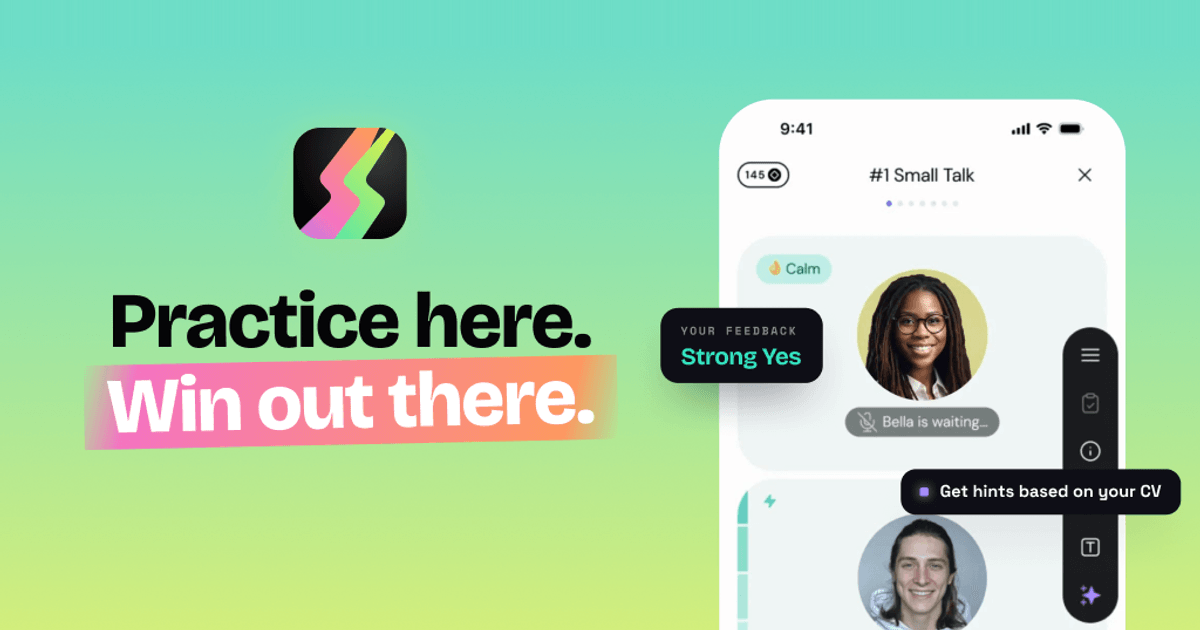
Duos is an AI-powered job interview preparation app that lets candidates rehearse a realistic voice interview before the real thing. You paste a link to a real job posting — the site says it can analyze any public link, including LinkedIn — and Duos builds the company, the role, the questions and a personalized interview flow around it. From there you put on headphones and talk out loud to an AI interviewer in a live voice conversation, just as you would in an actual interview. The product is built for anyone preparing for a job interview, from a first internship through to a senior career switch, and its stated purpose is simple: stop guessing why you are not getting hired, fix your blind spots, and land the job offer. Why Duos exists: the site opens with the blunt premise 'Stop guessing why you're not getting hired' and lists three reasons job interviews suck. First, preparation feels fake — rehearsing answers feels nothing like the real thing. Second, total uncertainty — the stakes are high and you don't even know if you're doing well. Third, no feedback — you get rejected and never hear what went wrong. The Product Hunt description frames the same problem differently, describing interviewing as 'a social game with unwritten rules, scored by people who never explain the score.' Duos positions itself as the rehearsal, a place to practice until you know exactly what to fix, so that you build real skills without risking real interviews. As the closing line of the site puts it, 'Practice here. Win out there.' Rehearse the real interview. The core workflow starts with a real job. You paste a link to a job posting — the site shows a LinkedIn jobs URL as an example and states that it can analyze any public link, even LinkedIn. Duos then runs an extraction process: reading the job post, pulling out the role, building the company and shaping the questions. You review the recognized job details, which include the company name, the role, the requirements and a role description. From there you pick the difficulty and the interview stages and generate a personalized interview flow. Because the simulation is built from your actual job posting and your CV, the questions stop being generic — the site notes that uploading your CV means the questions get built from your actual experience rather than staying generic. Talk and read the room. The interview itself is a live, realistic voice conversation. The interface shows the interviewer speaking and then waiting for you, along with emotional state indicators such as 'Pleased', 'Concerned' or 'Impressed', and a personality tag for each interviewer. Sessions are structured in question blocks — the example shown is an all-in-one interview with Mike of roughly 28 minutes and five questions covering small talk, past experience, UX strategy, design thinking, JTBD and Figma, and a Q&A. In-interview tools let you stay in control when you get stuck: you can see what is behind every question ('What does Mike really want to know?'), get hints based on your CV, go back and retry a topic, skip questions you're not ready for, show an example answer, explain the meaning of a question, or restore energy. The site emphasises that you have to talk out loud — 'It's a voice app, because the hardest part of job interviews is talking' — and that all it takes is headphones and ten minutes alone, with the option to pause any time to gather your thoughts. Get your game plan: the debrief. After the interview Duos produces a structured interview analysis described as a recruiter's opinion, plus an outcome such as 'Strong Yes', a count of red flags and a set of patterns. The example shown includes a hiring manager's written assessment, red flags such as negative remarks about a current workplace and a candidate speech level below expectations, confidence indicators, and a problem score. It also surfaces concrete speech patterns — for instance flagging a frequent filler word, quoting the exact replies where it appeared, and explaining how it affects you ('Stutters interrupt flow and distract from content'). The site promises a full breakdown with practical advice and real examples, and states that interviewers take notes about you and here you get to read them. Duos also tracks your performance across sessions, which the feature comparison table lists as something ChatGPT does not do and other interview apps rarely do. Stages and interviewers. Duos can run the whole hiring process or you can laser-focus on a single stage: a recruiter screen of roughly 10 minutes covering your background and motivation, a skills round of roughly 20 minutes covering your skills in action, projects, decisions and hard calls, and a manager chat of roughly 15 minutes about working style and team fit. Alongside the stages sits a large roster of AI interviewers, each with a distinct personality, demeanor and difficulty level. Examples from the site include Mike the know-it-all (100% honest, easy), Justin the impatient one (driven, hard), Mirna the mission-oriented (opinionated, mid), Marcus the high-pressure (authoritative, hard) and many more ranging from unhinged to encouraging, from hostile to supportive. The site frames this as 'Every interviewer hits different — choose who you're ready for.' Privacy. Duos makes explicit commitments about how your data is handled: your data stays private, is never sold and is never used to train AI. Your CV is scrubbed before any AI reads it, no human ever hears you, you can delete everything at any time, and only enterprise-grade, audited AI providers are used. In the FAQ the company confirms that nobody hears your recordings — it is you and the simulator, no recruiter on the line, no audience — that your audio isn't stored, and that you can delete your data whenever you want. The site also states that Duos does not judge your accent: it responds to what you say, not how you pronounce it, although it will still flag a sentence that is hard to follow, because a real interviewer would too. Why not just use ChatGPT. Duos is positioned explicitly against using a general-purpose chatbot for practice. Its comparison notes that ChatGPT drifts out of character, is always agreeable and rarely honest, asks few questions and then loses track, produces dense forgettable notes, and leaves you on your own. Duos, by contrast, is listed as offering consistent interview roleplay that stays in character, pushing back for real practice, simulating the full hiring process, producing a structured report, and offering tools when you're stuck. The Product Hunt description adds that there is a proudly over-engineered multi-agent stack inside, and that you talk to interviewers who have read your CV and can change tactics mid-conversation. The outcomes for users are focused on clarity and confidence. Instead of wondering whether you did well, you get red flags, green flags and an explanation of how to fix the patterns behind them. Instead of a rejection with no explanation, you get worked examples of better answers, and you can redo the question or redo the whole interview — nobody is keeping score but you, and failing here is the point. The site says the app builds real skills without risking real interviews, and reviewer quotes on the page describe it helping a freelancer land a first full-time design role in a competitive market, helping candidates practice interview English, boosting confidence, and pushing candidates on technical details such as API security. Concrete scenarios described on the site and by reviewers include preparing for a specific interview by uploading your CV and the job posting to get a simulation with specific questions; last-minute interview preparation; continuously improving skills to stand out from the crowd on the way to a new adventure; practicing interview English and fixing weak points in conversation; keeping interview skills sharp between real calls while staying in the context of your own profile; and rehearsing for any role and any level, from a first internship to a senior switch. The site notes that Duos will still ask hard technical questions and push you on your projects and decisions, but it is not a whiteboard tool. It also can't predict how a real conversation will go — the point, it says, is that whatever they throw at you, you can answer. Duos is available as a website and as a mobile app, with 5.0 ratings listed for both the App Store and Google Play. Pricing is straightforward: you get one full interview free with no card needed, and after that plans start at €22.99 a month, less if you pay quarterly, and practice is unlimited. It supports any role and any level. The FAQ answers questions about privacy, about whether you have to talk out loud (yes, it's a voice app), about what happens if you fail (you get feedback and worked examples of better answers), about whether it judges your accent (no), and about whether it supports technical interviews (it runs recruiter screen, skills deep-dive and hiring manager rounds but is not a whiteboard tool). In short, Duos turns interview preparation from guesswork into a repeatable loop: paste a real job, rehearse out loud with an in-character AI interviewer who has read your CV, then read a structured debrief that tells you exactly what to fix. Interview, debrief, repeat until you're ready — practice here, win out there.
Gesture Synth is a free, browser-based gesture synthesizer that allows users to create music using hand movements captured by their device's camera. This innovative tool requires no downloads or sign-ups, with all processing and recordings remaining local to the user's device for enhanced privacy. Users can play music with both hands, shaping chords and tone in real-time. The interface provides visual feedback, displaying hand landmarks and chord information to help users connect their movements with the resulting sound.The synthesizer offers intuitive control over musical elements. The left hand is primarily used to select chord degrees and shape the harmony, allowing users to switch between major and minor tonalities by tilting their hand. The right hand can then be introduced to control voicing, octave, volume, and filter settings, adding further depth and expression to the music. This two-handed approach enables a dynamic and responsive playing experience, turning simple gestures into complex musical expressions.Gesture Synth comes equipped with a playable sound engine that supports 12 different musical keys. Users can also choose from three distinct synth waveforms: Warm Synth, Bright Synth, and Retro Synth, allowing for a variety of sonic textures. The system is designed to be immediately responsive, with the sound engine reacting instantly to changes in hand position. This immediate feedback loop is crucial for learning and experimentation, enabling users to explore musical ideas as they arise.For those who wish to capture their creations, Gesture Synth offers a local MP4 performance recording feature. This allows users to record their live synth display, complete with generated audio, for up to five minutes. The recording process is straightforward: once the user initiates recording, the browser may request microphone access to combine audio with the visual performance. The resulting MP4 file can then be downloaded directly from the browser, ensuring that all creative output remains under the user's control and stays local.
AI Animal Identifier helps users identify animals from photos with fast AI visual recognition, species suggestions, and useful educational details.
AI Attractiveness Test is a free web tool that analyzes a face photo and returns an AI-powered attractiveness score with clear, privacy-conscious results.
How Old Do I Look is a free AI age detection tool that analyzes a face photo and estimates apparent age with a fast, privacy-conscious web experience.
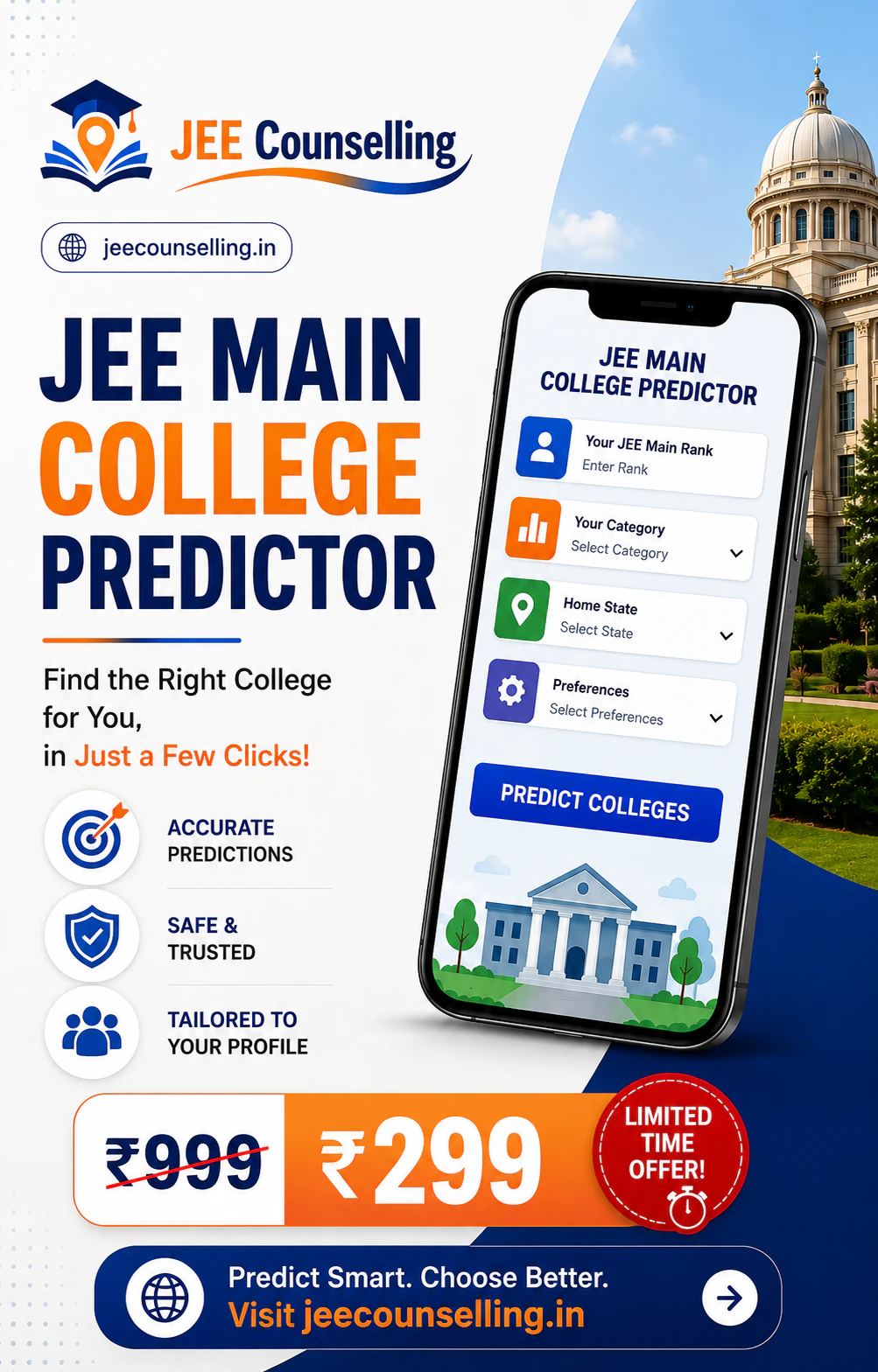
JEE Main College Predictor 2026 is a web-based tool designed to simplify the engineering college selection process for JEE aspirants. The platform uses previous JoSAA counselling data to help students understand which colleges and branches they can realistically expect based on their rank and category. The predictor provides admission chances for NITs, IIITs, and GFTIs by analyzing real JoSAA cutoff data from 2025. Students can input their rank and category to receive personalized predictions about which institutions are within their reach. The tool aims to eliminate the need for students to manually check scattered cutoff PDFs and YouTube videos. Key capabilities include showing realistic college options, expected branches, guidance on whether to wait for later counselling rounds, and safer backup choices. The system processes historical counselling data to generate transparent predictions, making the complex counselling process more accessible for students navigating post-result decisions. The platform works by analyzing previous years' JoSAA cutoff trends and matching them against current user inputs including rank and category. This data-driven approach provides students with evidence-based predictions rather than speculative advice, helping them make informed decisions about their college preferences and counselling strategies. Benefits include saving time otherwise spent researching scattered information sources, reducing confusion during the counselling process, and providing clarity on admission possibilities. Students can quickly identify which colleges are realistically achievable and plan their counselling choices accordingly without extensive manual research. The tool is specifically designed for JEE Main aspirants seeking admission to NITs, IIITs, and GFTIs through the JoSAA counselling process. It targets students who have received their JEE Main results and need guidance on college selection based on their performance and category.
ReferralWorld Careers is an AI-powered career platform designed to connect early-career tech professionals with job opportunities. The platform specifically targets individuals with 0-4 years of experience in the technology sector, providing them with multiple pathways to employment including referrals, direct recruiter engagement, internships, and internal hiring opportunities. The platform offers several key features for job seekers in the tech industry. It provides access to verified job openings, helping candidates find legitimate opportunities in their field. The referral system allows users to leverage their professional networks and community connections to access job opportunities. Additionally, the platform facilitates direct connections with recruiters, enabling faster hiring processes for qualified candidates. ReferralWorld Careers operates as a community-driven ecosystem that emphasizes modern recruitment practices. The platform helps candidates grow their professional networks while accessing verified job opportunities. Through its AI-powered approach, it streamlines the connection between tech talent and employers, creating a more efficient hiring process for both parties. The platform is designed to accelerate the hiring process for tech professionals at the beginning of their careers. By providing multiple avenues for job discovery including referrals, direct recruiter hiring, internships, and internal opportunities, it creates a comprehensive job search experience. The community-driven aspect ensures that candidates can build meaningful professional relationships while searching for employment. ReferralWorld Careers specifically serves tech professionals with 0-4 years of experience, making it an ideal platform for recent graduates, career changers, and early-career professionals in the technology sector. The platform's focus on this demographic ensures that job seekers receive relevant opportunities matched to their experience level and career stage.

LiveGlobe 3D is an interactive 3D Earth application that combines real-time planetary data with astronomical observation capabilities. The app allows users to spin a real-relief 3D Earth to view live natural events including earthquakes, volcanoes, storms and wildfires, sourced from NASA, USGS, NOAA and EONET databases. The application features two main modes: Earth mode displays live natural events on a 3D globe with real-time updates from scientific agencies including USGS for earthquakes, NASA for volcanoes, and EONET for storms and wildfires. Sky mode provides astronomical observation tools including ISS tracking, Moon positioning, planetary locations, and 119,000 actual stars from the Hipparcos catalog with IAU constellation lines and Stellarium artwork. LiveGlobe 3D operates as a single Android application that integrates multiple data streams into one interface. Users can switch between Earth and sky modes with one tap, allowing seamless transition from viewing terrestrial events to astronomical observations. The app sources data from established scientific organizations and presents it on an interactive 3D interface. The app supports six languages: English, German, Spanish, French, Italian and Portuguese. It operates without advertisements or user tracking and requires no account registration. The application is designed for amateur stargazers and those interested in real-time Earth monitoring. LiveGlobe 3D is currently available on Android platform with iOS and desktop versions planned for future release. The app was developed by indie maker Marcus Hoja from Germany.

Zubhai is an interactive learning platform designed to help users develop practical AI skills through hands-on challenges. Unlike traditional AI courses that focus on theory, Zubhai emphasizes real-world application by providing daily challenges tailored to each user's specific job role and skill level. The platform operates through a structured workflow: an AI conducts a 3-minute interview to build a personalized user profile, then delivers daily challenges customized to the user's exact job requirements. Users complete these challenges using ChatGPT within 15-20 minutes, and an AI agent evaluates their work on a 1-10 scale. The system incorporates gamification elements including points, streaks, and leaderboards to maintain engagement and track progress. Zubhai supports multiple languages including Hindi and English, making it accessible to a diverse user base. The platform caters to various professional roles including marketers, students, HR professionals, and teachers, positioning itself as a practical AI learning solution for non-developers. The verification system assesses user work to ensure genuine skill development rather than passive consumption of educational content. The technical infrastructure utilizes FastAPI, Supabase, GPT-4o-mini, DeepSeek, and Claude AI, with all components running on free tiers. This approach makes the platform accessible while providing robust AI-powered evaluation and personalization capabilities. By focusing on practical application rather than theoretical knowledge, Zubhai addresses the common problem of AI courses that teach concepts without requiring actual implementation. The platform's game-like structure and daily challenge format encourage consistent practice and skill development.
Little Hilbert's Hotel is an interactive picture book designed to introduce children to the concept of infinity through storytelling. Based on David Hilbert's famous "Hotel Infinity" thought experiment, the book presents a mathematical puzzle in an engaging narrative format that children can understand and enjoy. The book's core feature is its interactive storytelling approach that teaches mathematical concepts without using complex terminology. The narrative follows what happens when a new guest arrives at a hotel where every room is already occupied. Through the simple solution of having every guest move up one room, the story demonstrates mathematical principles about infinity and sets. What makes this book unique is that "the story IS the proof" - the narrative itself serves as a mathematical demonstration. The book avoids using words like "infinity" or "set" while still presenting mathematically accurate concepts. This approach allows children to grasp complex mathematical ideas through an entertaining story rather than formal instruction. The book is available to read free online, making it accessible to families and educators worldwide. A hardcover version is currently in production, with a waitlist available on the website for those interested in the physical edition. Created by Itai Bar-Sinai for his son, the book aims to make cool math concepts engaging and fun for children. The interactive picture book format combines storytelling with visual elements to create an educational experience that doesn't feel like traditional learning.