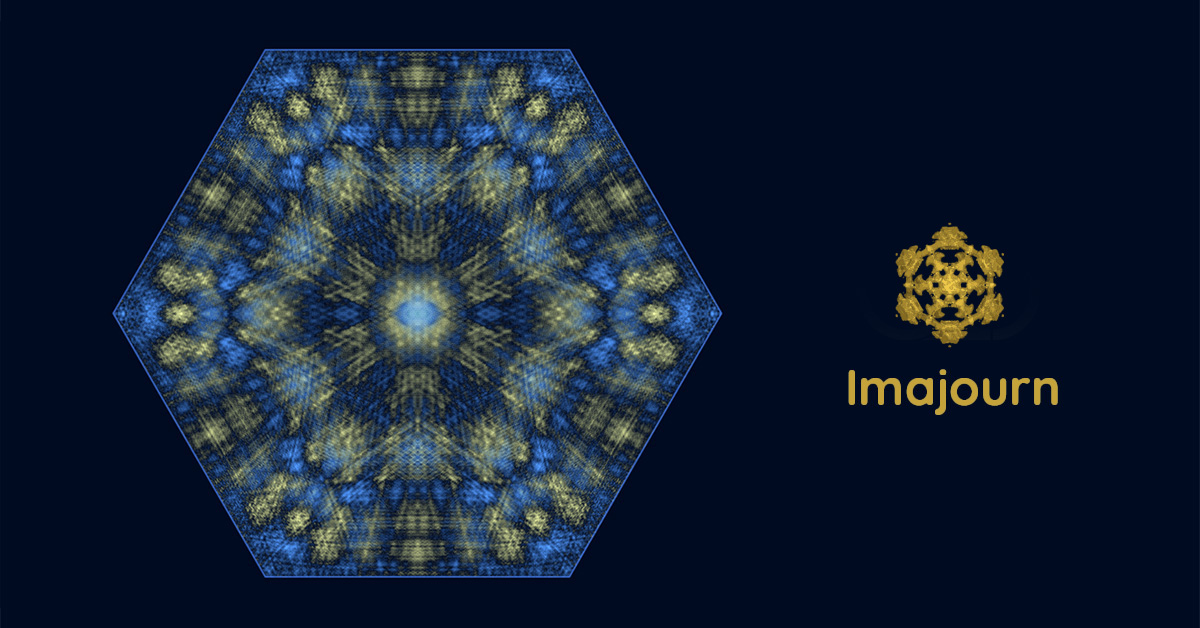
Imajourn functions as an interactive simulation sandbox that meticulously brings the complex physics of waves and sound to vibrant life through dynamic visual representations of light, motion, and geometric patterns. This digital environment is specifically designed for a diverse audience including artists seeking inspiration, physics enthusiasts eager to explore fundamental principles, and individuals looking for a unique, visually-driven meditative experience. The core purpose of the application is to provide an intuitive, hands-on platform where abstract scientific concepts become tangible, manipulable, and aesthetically engaging, transforming theoretical knowledge into an immersive sensory journey that bridges the gap between science and art through real-time simulation and user interaction.
Users often struggle to grasp the intricate behaviors of wave interference, resonance, and harmonic patterns through static diagrams or mathematical equations alone, creating a significant barrier to intuitive understanding and creative application. Traditional learning tools fail to capture the dynamic, fluid nature of these physical phenomena, leaving a gap for those who learn visually or kinesthetically. Artists and designers seeking to incorporate organic, physics-based patterns into their work lack accessible tools to experiment with these principles without deep technical expertise. Similarly, the abstract nature of sound visualization remains largely inaccessible outside specialized scientific software, preventing broader exploration and appreciation of the beautiful patterns hidden within acoustic physics.
The application's simulation of Chladni patterns represents a foundational feature group, allowing users to visualize how sand or particles arrange themselves into intricate geometric shapes on a vibrating surface based on specific frequencies. This is achieved by modeling a virtual plate that responds to user-controlled sound inputs, with particles dynamically settling into nodal lines where the surface remains stationary. The feature matters because it demystifies a classic physics demonstration, making it interactive and endlessly variable, enabling users to discover the direct relationship between sound pitch, amplitude, and the resulting two-dimensional patterns. Users can experiment with different base shapes for the plate and observe how the fundamental modes and harmonic overtones change the complexity of the formed figures, providing deep insight into resonance and normal modes of vibration.
admin
A second major feature group centers on comprehensive cymatics simulations, which extend the visualization to show how sound frequencies influence and shape various mediums like liquids or fine powders in real-time. This involves sophisticated fluid dynamics and particle system algorithms that render the immediate response of the simulated material to audio input, creating evolving, organic patterns that pulse and morph with the sound. This capability is significant as it reveals the hidden impact of vibration on matter, illustrating concepts like Faraday waves and acoustic levitation in a controlled, digital environment. It allows for safe, repeatable experimentation with phenomena that are typically difficult or messy to produce physically, unlocking creative and educational possibilities for visualizing music, voice, or synthesized tones as living art.
Additional capabilities include a versatile particle system that users can manipulate within the wave fields, observing how simulated forces like attraction, repulsion, and harmonic binding influence collective behavior. The sandbox environment supports free drawing and shape creation, enabling users to define custom boundaries and sources for waves to interact with, fostering open-ended exploration. The integration of light and color parameters allows for aesthetic customization of the simulations, where wave amplitude or frequency can modulate hue, brightness, and emission, transforming the display into a dynamic light painting. These tools collectively empower users to not just observe but also author unique scenarios, blending scientific simulation with personal artistic expression in a seamless workflow.
The product works overall by employing real-time physics engines and rendering techniques to calculate and display the interactions between user-defined parameters and simulated physical laws. The technical approach involves solving partial differential equations governing wave propagation and particle dynamics on the device's GPU for high performance, ensuring smooth, responsive visual feedback. Audio input from the device's microphone or generated tones is analyzed to extract frequency and amplitude data, which then drives the simulation parameters, creating a direct link between sound and visualization. The interface is designed to be minimal and intuitive, prioritizing direct manipulation of the simulation over complex menus, making advanced physics accessible through touch and gesture controls.
Benefits for users include achieving a profound, intuitive understanding of wave mechanics and acoustic phenomena through visceral, hands-on experimentation rather than passive study. Measurable outcomes involve enhanced creative output for artists who can generate unique, algorithmically-informed patterns and textures for use in digital or physical artworks. Educators and students gain a powerful demonstration tool that makes abstract concepts concrete, potentially improving retention and engagement with STEM subjects. For individuals using it for meditation or relaxation, the benefit is a customizable, generative visual experience that responds to ambient sound or breath, promoting focus and mindfulness through the mesmerizing display of harmonious patterns.
Concrete use cases include a digital artist loading the app to generate a complex, evolving background animation for a music video by singing into the device's microphone and capturing the resulting cymatic patterns. A physics teacher uses the app in a classroom, projecting it to show how changing the frequency of a tone alters the nodal lines on a simulated square Chladni plate, making the concept of standing waves immediately clear to students. A sound designer explores the app to find visual correlations for different audio textures, using the particle system to see how a bass drone creates slow, expansive waves while a glitchy high-frequency sound makes particles jitter rapidly. A user seeking a calming activity spends time drawing custom shapes and observing how waves reflect and interfere within them, creating a personalized, interactive mandala for stress relief.
The target users are explicitly artists, physics enthusiasts, and meditators, as stated in the metadata. The application integrates with the device's audio input system (microphone) for live sound analysis. Its tech stack is built for iOS, as indicated by its availability on the App Store, leveraging native frameworks for audio processing, graphics (likely Metal or SceneKit), and touch interaction. While specific pricing plans are not detailed in the provided content, the presence of an App Store badge suggests it is a downloadable application, which may follow a freemium, one-time purchase, or subscription model common to such platforms, but this cannot be assumed without explicit information.
In summary, Imajourn's primary value lies in its unique fusion of scientific simulation and artistic toolset, creating an accessible gateway to the beautiful mathematics of waves and sound. It transforms the user's device into a laboratory and canvas, where play leads to discovery and abstract principles become a source of both knowledge and wonder. By making complex physics tangible and beautiful, it empowers a wide range of users to explore, create, and understand in ways that were previously limited to experts or required specialized equipment, democratizing the experience of interacting with fundamental forces of nature.
The target users are explicitly artists seeking inspiration from physics-based patterns, physics enthusiasts eager to explore wave and sound principles interactively, and individuals looking for meditative, visually-driven experiences. The app serves those who learn and create best through visual and kinesthetic interaction, bridging the gap between scientific understanding and artistic expression. It is designed for anyone curious about the hidden patterns in sound and vibration, from educators and students to designers and hobbyists, all within an intuitive iOS application environment.