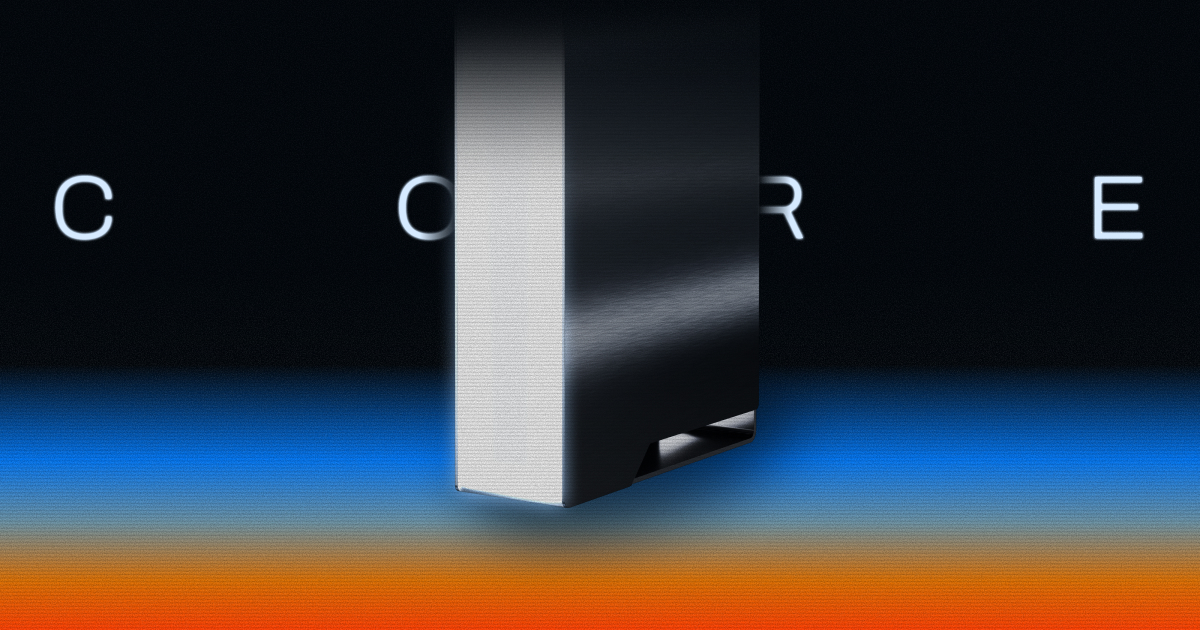
Ghost Core is a personal AI computer from Ghost, described on its website as the personal AI computer. It runs AI models entirely on device, connects to your apps, files, and devices, builds context on your life over time, and works continuously to help you, not just when you ask. The site frames the product as Intelligence you own, and states that everything you do with Core is run locally using models on-device, so that no data ever leaves your home and your AI is owned entirely by you. It is aimed at people who want a private, always-available assistant that lives in their home rather than somewhere else.
The problem Core addresses is presented on the site in two parts. The first is reactiveness: the site states plainly that Core doesn't wait to be asked, that it understands what is happening in your life and thinks proactively, and that it understands what to take action on without waiting for a prompt. Much of the value of an assistant disappears if the user has to think of the right question first. The second is ownership and privacy: the site's repeated claim is that intelligence stays yours on Core, that everything is run locally using models on-device, and that no data ever leaves your home. Together these two ideas — proactive help and local, owned intelligence — define what Ghost says makes Core different from assistance that lives elsewhere. Why it matters to Ghost's audience is stated in the copy itself: your AI is owned entirely by you, and the longer you use Core, the better it gets because context accumulates rather than resets.
Local intelligence is the first of the three pillars the site highlights, alongside continuous context and a proactive agent. According to Ghost, Core runs its models entirely on device, and everything you do with Core is processed locally. That design is offered as a guarantee rather than a setting: the site says no data ever leaves your home, and that your AI is owned entirely by you. Practically, this is the difference between a device that sends what it learns about you somewhere else and a machine that keeps it in the room. Ghost also lists no subscription among the headline product facts and offers 30 day returns, so the ownership pitch extends to the commercial model as well as the technical one.
Continuous context is the second pillar. Core runs 24/7, continuously taking in the context of your life, and it can connect to anything, from your apps, files, and screen history to wearables and smart-home devices. The site's stated consequence is simple: the longer you use Core, the better it gets. Rather than starting each interaction from zero, Core accumulates an ongoing picture of routines, activity, and surroundings. The examples shown on the page illustrate the texture of that context — a higher recovery score than usual, the observation that you work out more on early mornings, a package arriving today, groceries running low, rain tomorrow that may change the usual commute, four days of tacos in a row, stress peaking on Sunday nights, a refill pickup that could fit between gas and work, and a weekend trip that may need an earlier departure.
The proactive agent is the third pillar, and it is the most visible part of the product. The site's framing is that Core doesn't wait to be asked: it understands what is happening in your life, thinks proactively, and understands what to take action on without waiting for a prompt. The kitchen scenario on the homepage shows how this plays out in a concrete setting. Core combines what it has learned about you with what it can sense nearby and produces short, timely nudges — you said you wanted to eat more fruit, take an apple with you; you have already had two coffees today, maybe water first; and don't forget your keys. These are not requests the user typed; they are observations and suggestions generated from accumulated context and the moment at hand.
How Core works overall is a combination of on-device models, continuous data capture, and connections to the surrounding environment. The site states that Core is compatible with your devices and connects over Wi-Fi and Bluetooth. Its context sources are grouped into three areas: Digital, which captures context from the apps you use every day, including email, calendar, finances, files, recordings, and browser; Home, which connects to the devices in the world around you, including light, fridge, speaker, and cameras; and Health, which learns from your routine, recovery, and activity through sources such as health records, Whoop, Oura, and Eight Sleep. All of that feeds a set of models running locally on the machine, which then acts as the proactive agent described above.
The hardware is specified in detail on the site. Core ships with an NVIDIA RTX PRO 4000 Blackwell SFF Edition GPU with 24 GB of GDDR7 ECC memory and 432 GB/s of memory bandwidth, paired with an AMD Ryzen 5 7600 CPU with 6 cores and 12 threads, 64 GB of DDR5 memory, and a 1 TB NVMe SSD. The models listed as running on Core are Qwen 3.8-Next, Qwen 3.8-27B, Gemma 4-31B, and Muse-Glimmer-30B. In other words, the components that would normally sit in a data centre are packaged as a single object for the home — a brushed steel tower shown on the site from the front, back, and underside, with vents, a power input, and a light edge that glows.
The benefits Ghost claims follow directly from those design choices. Because everything runs locally, the user gets assistance without personal data leaving the home, and the AI is owned entirely by the user. Because there is no subscription, there is no recurring fee attached to continued use. Because context is continuous rather than session-based, the product is described as getting better the longer it is used. And because Core operates proactively rather than only on request, it can surface things the user had not thought to ask about — health and recovery observations, incoming packages, weather effects on a commute, or a reminder to pick up groceries.
Several concrete scenarios appear across the site. In the kitchen, Core notices what is present and what you have said about your intentions, and prompts you to take an apple, drink water instead of a third coffee, or remember your keys. In a daily-planning context, it surfaces that a package is arriving, that groceries are running low, or that a refill pickup could fit between gas and work. Around health and routine, it points out a recovery score higher than usual, that you tend to work out on early mornings, or that you are most stressed on Sunday nights. For travel and weather, it flags that rain tomorrow may change the usual commute or that a weekend trip may need an earlier departure.
Core is presented as a personal device for the home, priced at $3,499 with no subscription and a 30 day return window. Batch 1 is listed as sold out, and the site invites visitors to reserve for Batch 2 or to order now. Its context integrations span everyday app sources such as email, calendar, finances, files, recordings, and browser; smart-home hardware including light, fridge, speaker, and cameras; and health and sleep trackers such as Whoop, Oura, and Eight Sleep, plus health records. Connectivity is over Wi-Fi and Bluetooth, and the machine's stated purpose is to keep intelligence and control in the hands of the people who use them.
Taken together, Ghost Core is a personal AI computer whose value proposition is ownership: on-device models, no subscription, continuous context that improves with use, and a proactive agent that acts without waiting for a prompt. The site's own summary line is the clearest statement of intent — Ghost is building Core, the personal AI computer designed to keep intelligence and control in the hands of the people who use them.
Publisher
A
admin
Launch Date2026-10-12
Platformdesktop
Pricingpaid
Tech Stack
#NVIDIA RTX PRO 4000 Blackwell SFF Edition#AMD Ryzen 5 7600#64 GB DDR5#1 TB NVMe SSD#Wi-Fi#Bluetooth