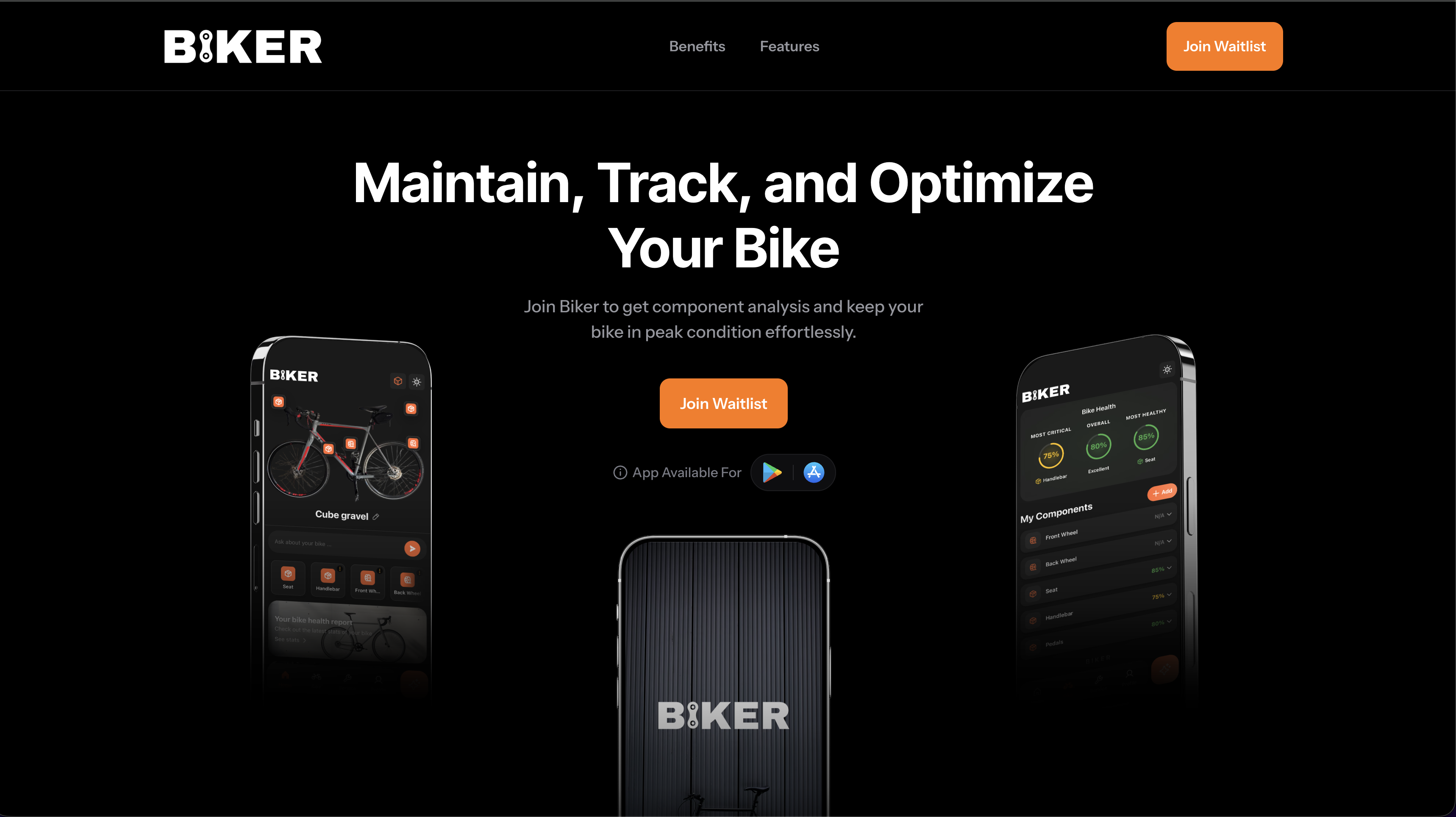
Biker is a comprehensive smart bike maintenance application designed specifically for cyclists who want to take a proactive and organized approach to caring for their bicycles. The app serves as a digital garage, providing a centralized platform where riders can meticulously track every component on their bike, receive intelligent reminders for upcoming maintenance, and access expert support through an AI chat assistant. Its primary purpose is to prevent mechanical failures and interruptions during rides by ensuring all parts are properly monitored and serviced on time, ultimately extending the lifespan of the bicycle and enhancing the overall cycling experience. The application is built for anyone from casual commuters to dedicated enthusiasts who rely on their bike for transportation, fitness, or recreation and seek a reliable system to manage its upkeep.
Cyclists often face significant challenges in maintaining their bicycles due to the complexity of tracking numerous components with varying service intervals. Many riders struggle to remember when specific parts like chains, brake pads, or tires were last replaced or serviced, leading to unexpected breakdowns, costly emergency repairs, or degraded performance at critical moments. Without a systematic approach, maintenance becomes reactive rather than preventive, causing frustration and potentially unsafe riding conditions. This disorganization is compounded by the difficulty of finding trustworthy local repair services when issues do arise, leaving cyclists to search manually or rely on incomplete word-of-mouth recommendations, which wastes valuable time and can result in subpar service.
One of the app's cornerstone features is its advanced component tracking and smart detection system. Biker allows users to build a complete digital profile of their bicycle, supporting over ten different component types and monitoring more than fifty parts across all bike varieties. Users can manually log each installed component, and the app leverages smart detection technology that can automatically identify up to six key bike components from just a single photograph. This capability significantly simplifies the initial setup process and ensures an accurate inventory. For each component, users can add multiple images, creating a detailed visual library that aids in identification, condition assessment, and management, making it easy to see exactly what is on the bike and what maintenance is scheduled next.
The maintenance reminder and overview system forms another major feature group, designed to keep cyclists consistently ahead of required servicing. Based on the tracked components and usage estimates, Biker generates a clear maintenance overview that visually highlights upcoming tasks. The app then sends timely, smart notifications directly to the user's device when specific parts need attention or service, acting as a personal mechanic that never forgets. This proactive alert system is based on both time intervals and estimated usage, helping users plan maintenance around their schedule rather than being surprised by failures. By centralizing this information, the app transforms maintenance from a guessing game into a predictable, manageable part of the cycling routine.
admin
Further enhancing its utility, Biker integrates a powerful AI-driven support and local service discovery ecosystem. The built-in chat assistant allows users to ask detailed questions about maintenance procedures, component compatibility, or next-step recommendations, providing expert guidance directly within the app. When professional help is needed, the nearby services feature enables cyclists to explore and find all available local repair shops and mechanics in seconds. Users can compare options and book appointments directly through the app, ensuring they find the service that best fits their specific bicycle needs and location, seamlessly connecting digital management with real-world repair solutions.
Technically, Biker operates as a mobile application available for both iOS and Android platforms, providing a user-friendly interface accessible via smartphones. The app functions by allowing users to create a digital profile for their bicycle, input or auto-detect components, and then uses this data to calculate maintenance schedules. It combines manual data entry with automated features like photo-based component detection and algorithm-driven reminder systems. The backend likely integrates with mapping and service provider databases to power the local shop finder, while the chat assistant utilizes AI to parse user queries and deliver relevant maintenance advice, creating a cohesive technical ecosystem focused on bicycle care.
The benefits for users are both practical and measurable, leading to tangible improvements in their cycling life. By using Biker, cyclists can expect a significant reduction in unexpected breakdowns and the associated stress, costs, and ride interruptions. The organized tracking and proactive reminders help extend the lifespan of expensive bicycle components through timely service, saving money in the long term. Users gain peace of mind knowing their bike's status is always visible and under control, and they save considerable time both in managing maintenance logs and in finding reliable repair services when needed, making the entire ownership experience smoother and more enjoyable.
Concrete use cases illustrate the app's value in everyday cycling scenarios. A daily commuter can use Biker to track the wear on their brake pads and chain, receiving a notification to service them a week before a potential failure during their ride to work. A weekend mountain biker can photograph their new suspension fork, have it automatically detected and logged, and then use the app to monitor recommended service intervals based on ride frequency. When that fork eventually needs professional servicing, the user can open the app, find nearby specialty bike shops, read available information, and book an appointment without ever leaving the platform, creating a seamless workflow from detection to action.
The target audience for Biker encompasses a wide range of cyclists, including daily commuters, fitness riders, mountain biking enthusiasts, road cyclists, and casual recreational riders—essentially anyone who owns a bicycle and wants to maintain it properly. The app integrates key functionalities like component libraries, maintenance tracking, AI support, and service discovery into a single tech stack accessible via mobile devices. While specific pricing plans are not detailed in the provided content, the app is available for download on major platforms, indicating a likely freemium or one-time purchase model aimed at making sophisticated bike management accessible to a broad user base.
In summary, Biker fundamentally transforms bicycle maintenance from a disorganized, reactive chore into a streamlined, proactive management system. By combining detailed component tracking with intelligent reminders, AI-powered expert advice, and integrated service discovery, it empowers cyclists to take full control of their bike's health. The primary value lies in preventing ride-interrupting problems, saving time and money on repairs, and providing the confidence that comes from truly knowing and caring for your bicycle, all through a single, intuitive mobile application designed for the modern cyclist.
Biker is designed for a broad spectrum of cyclists who seek an organized, proactive approach to bicycle maintenance. The primary target users include daily commuters who rely on their bike for transportation and need to prevent breakdowns, fitness enthusiasts and road cyclists who require peak performance and regular component servicing, and mountain bikers who subject their equipment to rigorous conditions and need to track wear on specialized parts. It also serves casual recreational riders and anyone who owns a bicycle and wants to extend its lifespan, save money on repairs, and avoid the frustration of unexpected mechanical issues. The app is built for anyone from the novice looking for guidance to the experienced rider wanting a centralized management system.
Updated 2026-02-28