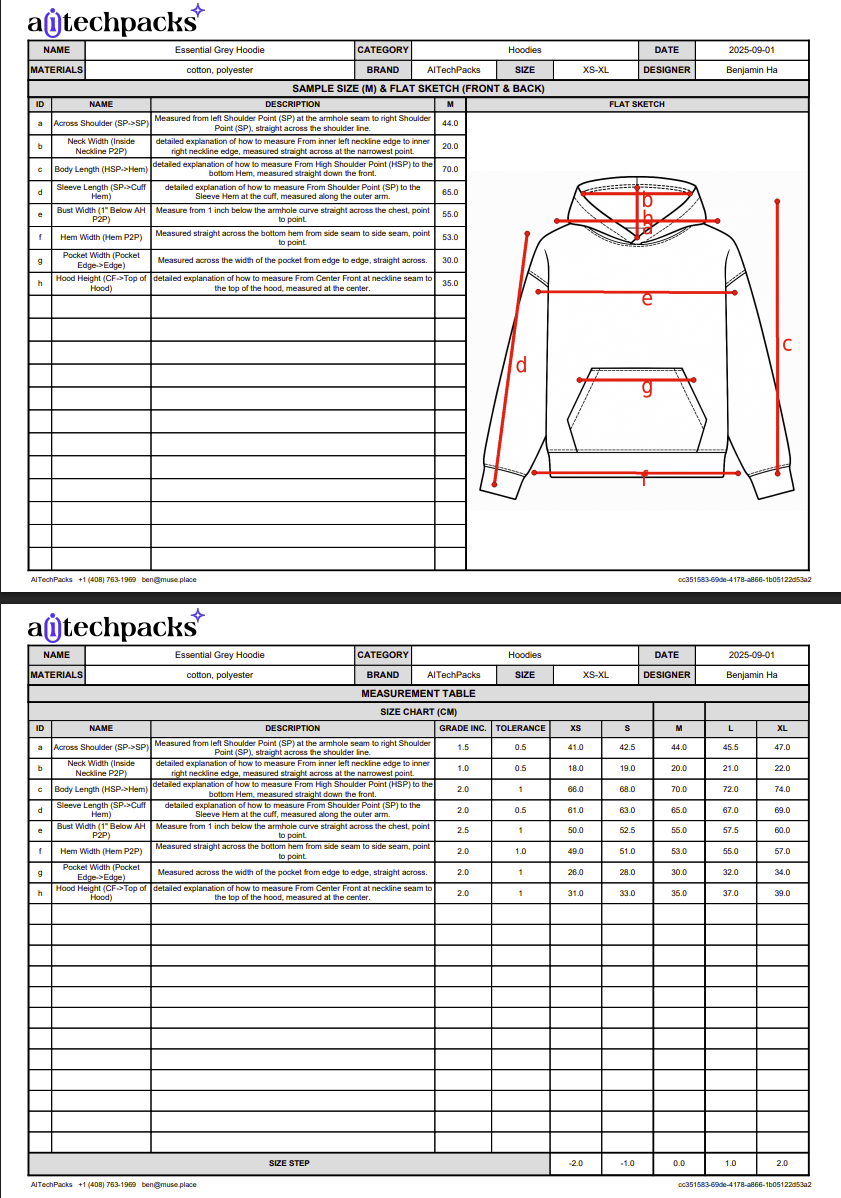

AI Tech Packs is a specialized software tool designed to revolutionize the fashion design and production workflow by automatically generating comprehensive, factory-ready technical specification documents, known as tech packs, from simple visual inputs. It serves fashion designers, technical teams, and factory partners, providing a critical bridge between creative design and physical manufacturing. The core purpose is to eliminate the manual, error-prone, and time-consuming process of building these essential production blueprints from scratch in tools like Adobe Illustrator and Microsoft Excel. By uploading a single image of a garment, sketch, or flat, users receive a detailed first draft containing all necessary specifications, enabling them to focus on refining production details rather than foundational formatting. This tool is specifically built for apparel industry professionals who need to communicate precise construction, material, and measurement requirements to their manufacturing vendors efficiently and accurately.
Traditionally, creating a tech pack is a labor-intensive bottleneck in the fashion production cycle, often requiring four to eight hours of meticulous manual work. Designers and technical developers must painstakingly draw or update garment flats in Illustrator, then copy specifications and Bill of Materials (BOM) data into separate Excel tabs, ensuring consistency across multiple documents. This fragmented process across different software tools leads to version control issues, formula errors, and miscommunication with factories. The fundamental problem is the repetitive rebuilding of the same document structures and the constant risk of human error in transferring data, which can trigger costly sampling questions and production delays. AI Tech Packs directly addresses this pain point by compressing hours of setup work into minutes, providing a unified platform to generate and edit all tech pack components from a single source of truth.
The first major feature group is the AI-powered generation engine that constructs a complete first draft from a visual reference. Users simply upload a garment photo, sketch, or technical flat, which the AI analyzes to understand the silhouette, construction, and styling. The system then automatically populates a structured tech pack with initial measurements, a Bill of Materials (BOM) framework, construction details, and suggested callouts. This automation matters because it provides a massive head start, with the generated draft being 50% to 70% complete, allowing the user to begin their review and refinement process immediately rather than starting from a blank slate. The AI interprets the visual cues to suggest logical spec points and material groupings, dramatically reducing the initial data entry and formatting burden that traditionally consumes the bulk of the tech pack creation time.
admin
The second major feature group centers on the comprehensive, all-in-one editing environment that consolidates the entire tech pack workflow. Instead of splitting work between Illustrator for flats and Excel for specs, users can edit everything—measurements, BOM items, trims, artwork, labels, and factory notes—within a single, unified interface. This integrated approach is crucial because it ensures data consistency, eliminates the need to manually sync updates across multiple files, and provides a holistic view of the garment specification. Users can review the tech pack as a factory would, checking for missing callouts, vague stitch notes, or duplicate materials before export. This centralized control directly tackles the revision management nightmare, making it easy to track changes and maintain one current, authoritative version of the production document.
A third critical capability is the flexible, factory-ready export functionality that delivers the final tech pack in the formats manufacturers expect. Once the draft is reviewed and edited to perfection, users can export clean, professional PDF or Excel files to send directly to their vendors. This ensures clear, unambiguous communication with the factory, reducing the likelihood of misinterpretation and subsequent sampling errors. The tool emphasizes that the export is the final step, only performed after the tech pack is fully vetted and 'clean,' reinforcing a workflow focused on accuracy over speed. Furthermore, the platform is backed by robust guides and resources, including a detailed tech pack template guide and blog articles comparing manual versus AI workflows, helping users optimize their entire production process from design to delivery.
Overall, the product works by leveraging artificial intelligence to interpret visual garment data and map it onto a structured, industry-standard tech pack template. The technical approach involves computer vision algorithms that identify key garment components, seams, and design features from the uploaded image. This analysis informs the automatic generation of measurement tables, material lists, and construction annotations. The system provides an editable draft where users can correct, adjust, and add granular details specific to their production needs. The entire process is designed to be intuitive, requiring no advanced technical drawing skills from the user, and focuses on augmenting human expertise by handling the repetitive structural setup, thereby freeing the designer to apply their knowledge to the nuanced details of fit, fabric, and finish.
The primary benefits and measurable outcomes for users are substantial time savings, increased accuracy, and clearer factory communication. Testimonials indicate that tasks which previously took hours can now be completed in minutes, even by non-technical creatives. This compression of workflow directly translates to faster time-to-market for new apparel lines. The automated generation reduces manual data entry errors, leading to more precise tech packs that minimize back-and-forth clarification requests from factories. The result is a more efficient sampling process, fewer production mistakes, and ultimately, lower development costs. The platform has been used to build over 17,000 tech packs by more than 500 fashion teams, demonstrating its tangible impact on streamlining apparel development operations.
Concrete use cases are abundant for independent designers, brand owners, and large apparel teams. An independent fashion designer can upload a sketch of a new dress design and within minutes have a draft tech pack with suggested measurements and a BOM framework to refine and send to a sample maker. A technical design team at a publicly traded apparel company can use the tool to rapidly generate first drafts for an entire seasonal collection, ensuring consistency across dozens of styles before deep-diving into fit specifications. A brand owner working with overseas factories can use the clear PDF exports to ensure every construction detail and trim specification is unmistakably communicated, reducing language barrier issues. A fashion educator can use the tool to teach students the essentials of tech pack creation by showing how an AI-generated draft serves as the foundation for professional refinement.
The target users are explicitly fashion designers, technical teams, factory partners, and operations leaders within the apparel industry. It is trusted by teams at publicly traded apparel companies and fractional COOs, indicating a reach from startups to established enterprises. The tool integrates into the existing fashion workflow by accepting common input formats (sketches, photos, flats) and exporting to standard factory formats (PDF, Excel). While the specific tech stack is not detailed, the product is a web-based application, as indicated by its website URL and demo access. Pricing plans are not explicitly stated in the provided content, but a free demo and a 'free to try' model are prominently mentioned, suggesting a freemium or trial-based approach to user acquisition.
In summary, AI Tech Packs delivers primary value by acting as an intelligent automation layer for one of the most tedious yet critical phases of fashion production. It transforms a multi-hour, error-prone manual process into a streamlined, minutes-long operation that begins with a simple image upload. By providing a robust, editable first draft and a unified editing workspace, it empowers designers and technical teams to focus their expertise on perfecting garment specifications rather than wrestling with document formatting and software juggling. The ultimate takeaway is that this tool enables fashion professionals to get their designs to market faster and with greater precision, ensuring factories receive clear, comprehensive, and actionable instructions to turn creative visions into physical products efficiently.
The primary target audience is fashion designers, technical design teams, product developers, and operations leaders within the apparel industry. This includes independent designers, brand owners, and teams at publicly traded apparel companies who need to create detailed garment specification documents for manufacturing. Factory partners who receive these tech packs are also secondary users who benefit from the clarity and completeness of the documents. The tool is designed for both non-technical creatives and seasoned technical professionals looking to compress hours of manual setup work into a faster, more accurate process.