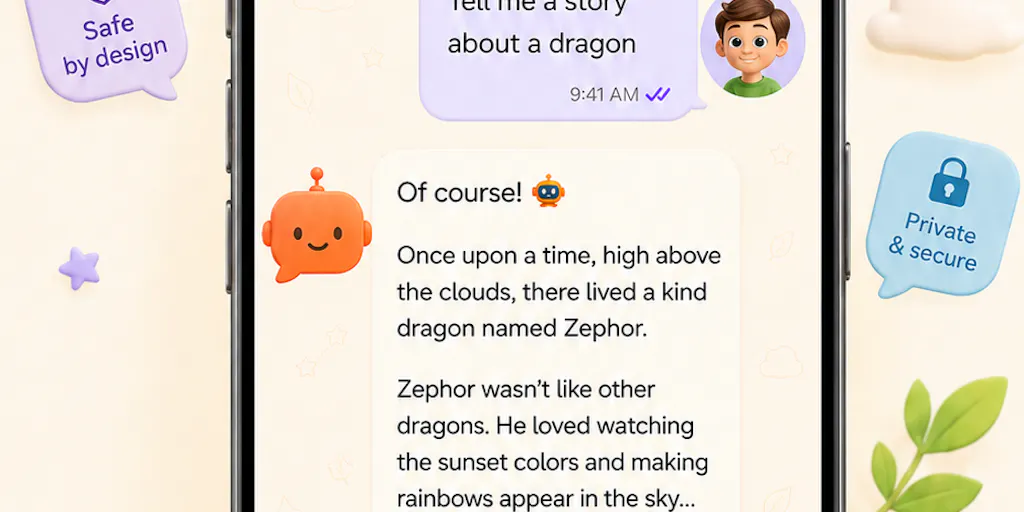
Yoggi is an AI-powered assistant specifically built for children between the ages of 3 and 15. Its primary purpose is to provide a safe and engaging digital environment where children can interact with artificial intelligence. The platform offers age-adapted answers, live voice chat capabilities, and image generation features, all while maintaining a strong emphasis on strict content filtering and robust parental controls. Yoggi aims to be a secure and educational tool for young users, ensuring their online experience is both fun and protected.
The development of Yoggi was driven by the recognition that children will inevitably encounter AI technologies. However, many existing AI tools are not designed with the specific needs and safety considerations of children in mind. The creator observed that most AI assistants are geared towards adults, lacking the necessary age-appropriateness and parental oversight required for younger users. This gap highlighted the need for a dedicated AI solution that prioritizes a child's safety and developmental stage, creating a secure first experience with AI technology.
One of the core features of Yoggi is its age-adapted conversational abilities. The AI dynamically adjusts its language, vocabulary complexity, and response length based on the child's exact age. For younger children, responses are kept short and use simple, concrete words. As the child grows older, the replies become longer and the vocabulary expands. For teenagers, Yoggi adopts a more mature and natural tone, respecting their independence. This ensures that the interaction remains relevant and understandable for each age group within the 3-15 range.
Live voice chat is another key capability, allowing for more natural and interactive conversations. This feature is designed to make the AI feel more engaging for children, facilitating a back-and-forth dialogue. Complementing this is the image generation feature, which allows children to create visual content through AI, fostering creativity and exploration. These interactive elements are integrated within a framework that prioritizes safety and age-appropriateness.
Content filtering and parental controls are central to Yoggi's design. The platform employs strict content filtering to prevent exposure to inappropriate material. Parental controls provide parents with oversight and management tools. This includes an AI-generated daily digest for parents, summarizing engagement levels, topics discussed, and overall mood, without providing a full transcript. For genuinely concerning issues, parents receive immediate alert emails. A PIN-protected full conversation history is also available for deeper review if needed, offering a balance between privacy and parental awareness.
Yoggi's approach to safety is multi-faceted. It avoids presenting itself as human and can remind children that it is a program. For the youngest users (3-5), there's consideration for stronger reminders that Yoggi is not a person and does not have feelings, potentially limiting features that make the interaction feel overly human. For older children and teenagers, Yoggi explores directing them toward external support resources in addition to or instead of parental guidance for serious issues. The AI is programmed to take everyday feelings seriously but always encourages discussion with a trusted adult for signs of real danger, abuse, bullying, or self-harm.
The benefits for users are centered around safe exploration and learning. Children can engage with AI in a protected environment, fostering curiosity and developing digital literacy. Parents gain peace of mind through comprehensive safety features and transparent oversight tools, allowing them to manage their child's AI interaction without constant surveillance. The adaptive nature of the AI ensures that children receive age-appropriate content and engagement, supporting their development.
Concrete use cases for Yoggi include a child asking about a science topic and receiving an age-appropriate explanation, a teenager using the image generation feature to create artwork, or a younger child engaging in a simple voice conversation about their day. Parents can use the daily digest to understand their child's interests and emotional state, and receive alerts for potentially serious issues, enabling timely intervention.
Yoggi is available for free on iOS and Android platforms. The product is targeted at children aged 3-15 and their parents or guardians. While specific integrations or tech stack details are not explicitly mentioned, the focus on mobile platforms (iOS and Android) and AI capabilities suggests a modern mobile development environment.
In summary, Yoggi provides a secure, age-appropriate, and engaging AI experience for children, empowering them to explore and learn while offering parents robust safety features and peace of mind.
Publisher
A
admin
Launch Date2026-07-27
Platformmobile
Pricingfree
Domain Authority
Ahrefs DR0/100